

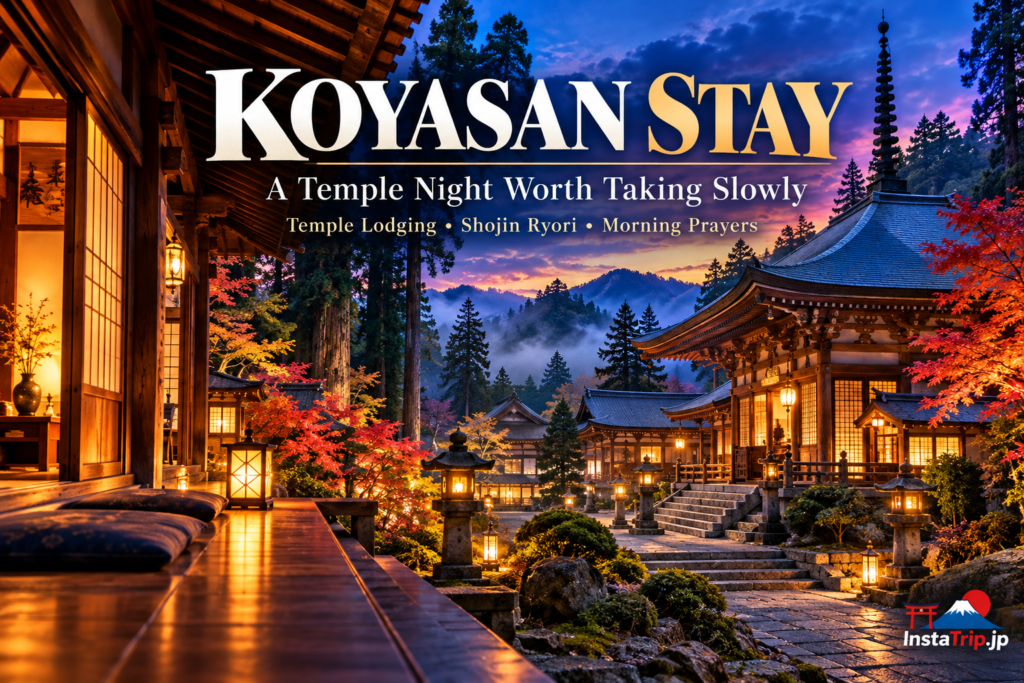
A Koyasan temple stay changes the pace of a Japan itinerary. After the final cable car rises over forested slopes and the air turns cooler, Mount Koya feels far from the kinetic glow of Osaka or Kyoto. Cedar-lined paths, temple gates, stone lanterns, and the gentle sound of bells create an atmosphere that is not staged for visitors. This is a living center of Shingon Buddhism, and spending the night here offers a rare chance to experience its rhythms with care.
Koyasan, also known as Mount Koya, is not a retreat in the casual sense. It is a sacred temple town founded in the early ninth century by Kobo Daishi, the posthumous name of the monk Kukai. More than 100 temples remain across the high-altitude basin, and official Wakayama tourism information currently lists 51 shukubo that welcome overnight guests. Temple lodging, called shukubo, combines practical hospitality with an encounter shaped by Buddhist tradition, seasonal food, and quiet reflection.
Koyasan Temple Stay at a Glance
- Best for: travelers who want a slower, more immersive overnight experience on Mount Koya.
- What is included: many shukubo stays include a tatami room, dinner, breakfast, and the option to attend morning prayers.
- Meals: expect shojin ryori, Buddhist vegetarian cuisine built around tofu, vegetables, rice, sesame, pickles, and seasonal ingredients.
- Bathrooms: facilities vary from shared baths and toilets to rooms with private facilities.
- Booking: use the official Koyasan Shukubo Association booking site to compare current availability and reservation options.
- Ideal length: one night works well for most first-time visitors; two nights suit travelers who want a slower pace.
What Makes a Koyasan Stay So Special
The appeal is not luxury in the conventional hotel sense, although some temple lodgings are exceptionally comfortable. A Koyasan overnight stay is memorable because the experience is woven into the place itself. Your room may look onto a mossy garden or a courtyard softened by morning mist. Slippers wait by the entrance, tatami cover the floor, and futons are prepared after dinner. The setting encourages you to notice small details: the warmth of tea in your hands, the creak of a wooden corridor, the changing light on a paper screen.
Many guests arrive expecting a historic accommodation and leave with a deeper appreciation of how heritage is practiced rather than preserved behind glass. Temples hosting visitors have different levels of formality, room styles, bathing facilities, and English support. Some feel intimate and simple; others have refined gardens, private toilets, or modern conveniences. The common thread is the chance to stay inside a community that continues to care for a sacred landscape.

That distinction matters. A temple is not a themed inn, and guests should approach it with the awareness that religious services, shared spaces, and daily routines have meaning beyond tourism.
How to Book a Koyasan Shukubo
For the clearest starting point, use the official Koyasan Shukubo Association. Its English booking portal offers instant booking for selected temples and a request service covering the wider network of Koyasan lodgings. Availability, room type, meal plan, bathroom setup, and payment method can differ by temple, so compare the details before paying.
When choosing a temple, look beyond the room photo. Check the latest check-in window, whether dinner is included, whether morning prayers are offered, whether the bath is shared, and how far the temple is from Okunoin, Danjo Garan, or the bus stops you expect to use. If you have dietary restrictions, contact the lodging directly before arrival rather than relying on assumptions about Buddhist cuisine.
How Much Does a Koyasan Temple Stay Cost?
Prices vary widely by temple, season, room type, bathroom setup, and whether a meal plan is included. Instead of relying on an old fixed price range, check the live rate for your dates on the official booking portal. Many stays are sold with dinner and breakfast, so compare the total experience rather than the room price alone.

Expect autumn weekends, major holidays, and more private room categories to cost more or sell out earlier. If budget matters, compare several temples and check the cancellation policy before confirming.
Choosing Temple Lodging on Mount Koya
When selecting a shukubo, consider the kind of experience you want rather than choosing solely by photographs. Travelers who value privacy may prefer a room with an ensuite bathroom, while those seeking a more traditional experience may be comfortable with shared bathing facilities. Bathrooms are typically separated by gender and follow Japanese bathing customs: wash thoroughly before entering the communal tub, and keep towels out of the water.
Location also shapes the stay. Lodging near Danjo Garan places you close to one of Koyasan’s most striking temple complexes, where the vivid vermilion Konpon Daito pagoda stands against the dark green forest. A stay near Okunoin offers easy access to the town’s most atmospheric path, a vast cemetery of ancient cedars, memorial stones, and lanterns leading to Kobo Daishi’s mausoleum.
Meals are another important factor. Many shukubo serve shojin ryori, Buddhist devotional cuisine traditionally prepared without meat or fish. Rather than treating it as a restriction, see it as a culinary expression of seasonality and mindful preparation. Expect tofu in varied forms, mountain vegetables, sesame, pickles, rice, miso soup, and carefully arranged small dishes. The flavors can be delicate, though they are often deeply satisfying after a day of travel.
If you have serious dietary needs, contact the property before booking and do not assume every request can be accommodated. Vegan travelers may find the cuisine appealing, but some broths or seasonings can vary. Those who need a late dinner should plan carefully as well: temple meals are commonly served early, and kitchens may not operate like those at a city hotel.
Is One Night in Koyasan Enough?
A day trip can reveal Koyasan’s grand architecture, but it misses its most evocative hours. Late afternoon brings a softness to the temple district after many visitors depart. At dawn, low clouds can drift between the trees, and the streets feel hushed before breakfast. An overnight stay gives you room to walk without rushing and to understand why Mount Koya has drawn pilgrims for centuries. If sacred travel is part of your route, our Kumano Kodo pilgrimage guide pairs naturally with Koyasan in the Kii Peninsula.
One night is enough for travelers on a tight schedule, particularly if they arrive by early afternoon. Two nights suit visitors who want to see major sites slowly, join morning prayers, and spend time walking through Okunoin without watching the clock. The trade-off is that evenings are quiet. Koyasan is not the place for nightlife, shopping marathons, or a long list of restaurants. Its magic lies in accepting that quieter tempo.
Morning Prayers: Observe With Respect
Many temple lodgings invite guests to attend morning prayers, often before sunrise. This can be one of the most powerful parts of a Koyasan stay, but it is not a performance. Chanting, incense, bells, and ritual movements form part of active religious practice. Guests are welcome to sit quietly and observe, following staff guidance about where to enter, whether photography is permitted, and how to behave in the hall.
You do not need to understand every word to appreciate the experience. The resonance of chanting within a wooden temple can feel magnificent, especially as daylight begins to reach the garden outside. Yet meaningful participation does not require imitation. Sit calmly, silence your phone, dress neatly, and let the service unfold on its own terms.
At temples and sacred sites throughout Koyasan, modest clothing is a thoughtful choice. Remove shoes where requested, avoid loud conversation, and do not step into restricted areas. This is straightforward etiquette, but it also creates a more attentive experience for everyone present.
How to Get to Koyasan from Osaka
The journey is part of the transition. From Osaka, the standard public-transport route starts at Namba on the Nankai Koya Line, continues to Gokurakubashi, then climbs by cable car to Koyasan Station before local buses carry visitors into the temple town. It is scenic, but it requires more time and coordination than a direct ride to a major city. Check schedules in advance, especially if you are arriving later in the day or traveling during winter weather.
Try to reach your temple lodging before its stated check-in cutoff. Dinner and bathing times may be fixed, and a late arrival can mean missing one of the central elements of the stay. Pack light if possible. Rolling a large suitcase over gravel or up temple steps is not ideal, and the cable car journey is easier with a manageable bag.
Koyasan is beautiful in every season, but each brings practical considerations. Autumn colors enrich the temple grounds and draw more visitors. Winter can be serene, snow-covered, and extremely cold, with occasional transport disruptions. Spring offers fresh mountain air and delicate blossoms, while summer brings lush greens and cooler temperatures than nearby cities, though rain is possible.
Cash remains useful for buses, small shops, and donations, even though payment options have expanded. Bring warm layers year-round, since mountain evenings can feel chilly. A compact umbrella, comfortable walking shoes, and a small day bag will serve you well on the paths around Okunoin and the temple precincts.
Useful Gear for a Koyasan Temple Stay
Affiliate disclosure: As an Amazon Associate I earn from qualifying purchases.
- Lightweight travel daypack on Amazon — useful for Okunoin walks, temple visits, and keeping luggage manageable on the cable car.
- Compact lightweight umbrella on Amazon — handy in Koyasan’s changeable mountain weather.
- Comfortable travel socks on Amazon — practical when shoes come off frequently at temples and traditional lodgings.
Watch Koyasan in 4K
For a quiet visual sense of Mount Koya before you go, this 4K walk by Japan Geographic follows the route from Daimon toward Okunoin with the landscape, temples, and streets taking center stage.
Beyond the Temple Room
Set aside time for Okunoin, preferably in the early morning or toward evening when the forest feels especially still. The approach passes hundreds of thousands of memorials, from feudal-era monuments to more contemporary markers. It is a place of remembrance, not an attraction to hurry through. Keep voices low, stay on the paths, and allow the scale of the cedar forest to set the mood. If that atmosphere appeals to you, read our guide to Japanese forest bathing (森林浴).
Danjo Garan offers a different kind of grandeur. Its halls and pagoda express the visual world of Shingon Buddhism through color, proportion, and symbolism. Nearby Kongobu-ji, the head temple of Shingon Buddhism, is known for its elegant interiors and Banryutei rock garden. Together, these sites provide context for the temple town beyond the intimate experience of your lodging.
Koyasan Temple Stay FAQ
What is a shukubo?
A shukubo is a temple lodging traditionally used by pilgrims. In Koyasan, many shukubo welcome travelers for an overnight stay that may include tatami rooms, Buddhist vegetarian meals, and optional morning services.
Is one night in Koyasan enough?
For most first-time visitors, one night is enough to experience dinner, a quiet evening, morning prayers, breakfast, and the main sights. Two nights are better if you want more time for meditation, temple visits, or slow walks through Okunoin.
Do you need to be Buddhist to stay in a Koyasan temple?
No. Visitors of different beliefs are welcome. The important part is respecting the temple’s rules, quiet hours, sacred spaces, and guidance during religious services.
Where should you book a Koyasan temple stay?
The safest starting point is the official Koyasan Shukubo Association booking site, where you can see current reservation options and request accommodation across the temple-lodging network.
Do not overfill the schedule. The most rewarding moments may be the unplanned ones: pausing beside a lantern-lit gate, drinking tea after a cool walk, or returning to your room as evening settles over the mountains. Koyasan asks very little of its guests except time, quiet attention, and respect. Give it those things, and the stay can become one of the most enduring memories of Japan.