
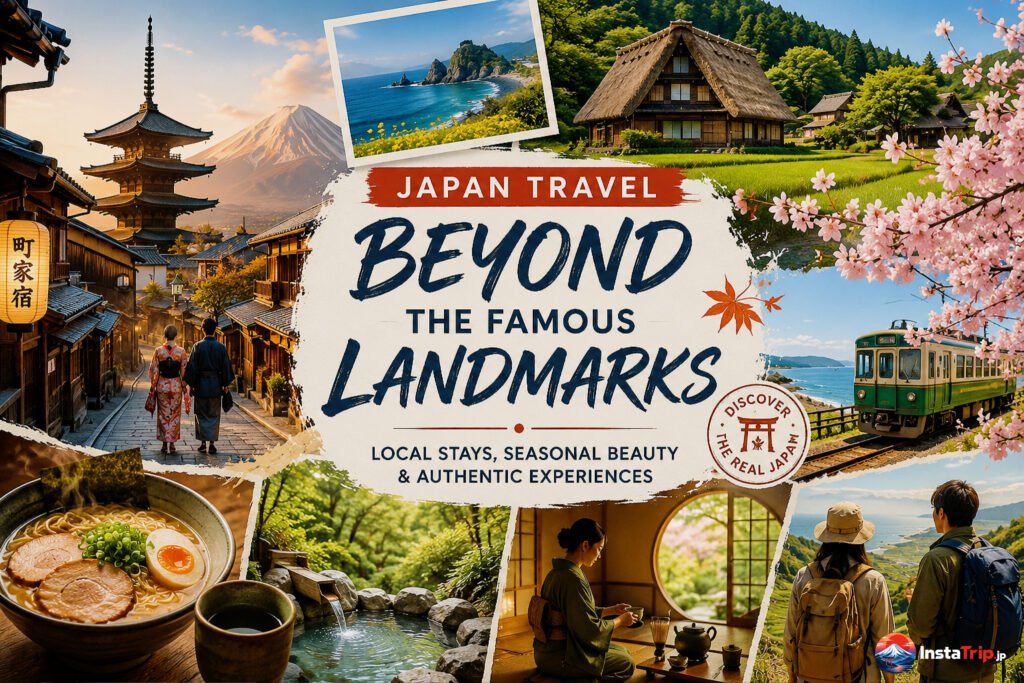
The first memorable moment of Japan travel is often not a landmark at all. It may be the hush of a shrine approach before the city wakes, the clean snap of a train door closing, or the steam rising from a bowl of noodles beneath a glowing station sign. Japan rewards an itinerary, but it also rewards attention. Its most captivating experiences appear in the space between celebrated sights: on neighborhood streets, inside small shops, and within customs that give each destination its character.
For a first visit, the temptation is understandable. Tokyo’s neon energy, Kyoto’s temples, Mount Fuji, Osaka’s food streets, and Hiroshima’s moving history all deserve their place. Yet the most meaningful trip is rarely about collecting the greatest number of destinations. It is about allowing time to understand why a place matters, how it has changed, and what everyday life feels like around it.
Japan Travel Begins With Rhythm, Not a Checklist
Japan is wonderfully efficient, but that does not mean a trip should be rushed. Fast rail connections can make Tokyo, Kyoto, Osaka, and Hiroshima feel close together on a map. In practice, moving cities takes energy: checking out, finding platforms, carrying luggage, learning a new neighborhood, and resisting the urge to see everything before dinner.

A stronger approach is to choose a few regions and give each one room to breathe. Tokyo can easily fill several days because its districts are worlds apart. Asakusa brings temple bells, traditional craft shops, and the enduring presence of Sensō-ji. Shinjuku is kinetic and vertical, with glowing streets, vast stations, gardens, and late-night dining. Ginza feels polished and architectural, while Akihabara celebrates anime, games, electronics, and pop culture with unmistakable intensity.
The same principle applies outside the capital. Kyoto is not a single atmosphere. Its historic lanes, contemplative temples, riverbanks, markets, and contemporary creative spaces reveal different sides of the former imperial city. Osaka is equally layered: a city of exuberant food culture and nightlife, but also of merchant history, riverside walks, and the grand silhouette of Osaka Castle. Give one neighborhood an unhurried afternoon, and a city begins to feel less like a backdrop and more like a living place.
Build Around Mornings and Evenings
The hours before 9 a.m. and after sunset can transform famous destinations. Arrive early at a temple or shrine, when the grounds are quieter and the changing light reveals architectural details that disappear in midday crowds. In the evening, let a station district, lantern-lit alley, or small local restaurant shape the plan.
This does not mean avoiding major sights. It means visiting them with intention. A morning at Sensō-ji, for example, becomes richer when followed by time in Asakusa’s side streets, where old Tokyo’s atmosphere survives in workshops, coffee shops, and modest eateries. The landmark is the beginning of the story, not the entire story.

Let Seasons Shape the Journey
Japan’s seasons are not merely a weather forecast. They influence food, festivals, clothing, gardens, landscapes, and the emotional texture of a city. Spring cherry blossoms are magnificent, but they also bring heavy demand for hotels and popular viewing spots. Reserving early matters, especially in Tokyo, Kyoto, and destinations near Mount Fuji.
Summer is vivid, humid, and alive with fireworks, matsuri festivals, and green mountain scenery. It is an excellent time for Hokkaido’s cooler landscapes, highland escapes, and Okinawa’s beaches, though heat and rain can affect a tightly packed city itinerary. Autumn brings crisp air and spectacular foliage, particularly around temple gardens, Nikko, Hakone, and Kyoto. Winter offers clear views, illuminated streets, hot springs, snow festivals in the north, and a quieter mood in many historic destinations.
Seasonality also changes what is on the table. Spring bamboo shoots, summer chilled noodles, autumn mushrooms and chestnuts, and winter hot pots are reminders that Japanese food culture is deeply connected to the calendar. Rather than searching only for famous dishes, look for seasonal specialties and regional ingredients. A meal becomes a small introduction to place.
Move Through Japan With Curiosity and Care
Japan’s rail system is one of the great pleasures of traveling across the country. Local lines, subways, and shinkansen routes make it possible to connect enormous cities with coastal towns, hot spring retreats, and mountain landscapes. Still, convenience has a trade-off: an overambitious route can turn a journey into a sequence of platforms.
Before committing to a rail pass or long-distance tickets, estimate the journeys you will actually take. Passes can be worthwhile for some multi-city routes, but individual tickets may make more sense for a slower itinerary. In cities, an IC transit card is often the simplest way to pay for trains, subways, buses, and many small purchases. Keep some cash available as well, particularly for temples, rural areas, market stalls, and independent businesses.
Etiquette is part of moving gracefully through Japan. Stand to the side when using an escalator according to local practice, keep phone calls quiet on trains, and avoid blocking entrances with luggage. When visiting shrines and temples, observe posted guidance and the behavior of those around you. These are active spiritual and cultural spaces, not sets for photographs. Respectful curiosity creates a better experience for everyone.
Choose One Slower Destination
Balance Tokyo’s dynamic scale with a place where the pace changes. Kamakura offers Buddhist temples, Shinto shrines, coastal air, and the Great Buddha within easy reach of the capital. Hakone pairs hot springs, art museums, volcanic landscapes, and views toward Mount Fuji when the weather cooperates. Kanazawa is captivating for its preserved districts, garden culture, craft traditions, and refined food scene.
Elsewhere, Nara’s sacred deer park and monumental Buddhist heritage invite reflection, while Hiroshima combines a vital contemporary city with places of remembrance that deserve time and sensitivity. In Hokkaido, wide horizons, fresh seafood, flower fields, and winter snow create an entirely different vision of Japan. Each choice shifts the emotional balance of the trip.
Eat Beyond the Headline Dishes
Sushi, ramen, tempura, and wagyu are famous for good reason, but they are only a first chapter. Japan’s food culture is intensely regional. In Fukuoka, tonkotsu ramen reflects the city’s beloved yatai food-stall culture. Osaka’s takoyaki and okonomiyaki carry the relaxed, sociable spirit of the city. Okinawa introduces distinct flavors shaped by its island history, while Hokkaido is known for dairy, seafood, and warming bowls of soup curry.
Small restaurants can feel intimidating when there is no English menu, but a little patience goes far. Look at display cases, photos, or what other diners are ordering. Learn a few polite phrases, be clear about dietary restrictions, and understand that highly specialized shops may have limited substitutions. The reward is often a meal that feels personal rather than prepackaged for visitors.
Convenience stores deserve appreciation, too. They are a practical source of breakfast, drinks, snacks, and surprisingly thoughtful seasonal items. A picnic assembled from a neighborhood grocery store can be just as memorable as a reservation, especially beneath spring blossoms or beside a quiet river.
Make Space for the Japan You Did Not Plan
The country’s famous contrasts are real: ancient gates beside contemporary towers, centuries-old crafts alongside digital art, tranquil gardens within reach of busy intersections. But these contrasts are not simply visual. They reflect a culture where continuity and change often exist side by side.
Leave a few open hours in every city. Follow the sound of a festival drum. Step into a local gallery. Wander through a covered shopping street, called a shotengai, where fruit sellers, bakeries, repair shops, and family-run businesses reveal the rhythms of daily life. Seek out a sento public bath if you are comfortable with its customs, or simply pause in a park and watch the neighborhood move around you.
The most rewarding Japan travel plans do not try to capture the whole country in one visit. They create enough space for one temple garden, one late-night bowl of ramen, one train ride toward a less familiar town, and one unexpected conversation or view to stay with you long after the itinerary ends.
![[商品価格に関しましては、リンクが作成された時点と現時点で情報が変更されている場合がございます。]](https://hbb.afl.rakuten.co.jp/hgb/574e4551.ff303b5a.574e4552.c7bc6bc8/?me_id=1362386&item_id=10000367&pc=https%3A%2F%2Fthumbnail.image.rakuten.co.jp%2F%400_mall%2Ff062120-obanazawa%2Fcabinet%2F08851915%2Fob-tcrtx10_t_v4.jpg%3F_ex%3D128x128&s=128x128&t=picttext "[商品価格に関しましては、リンクが作成された時点と現時点で情報が変更されている場合がございます。]")