

Tokyo can change character in the space of a single block: a quiet shrine approach gives way to a concrete gallery, then a glittering fashion facade rises behind a row of zelkova trees. This Tokyo architecture walking tour guide follows that exhilarating contrast through Harajuku, Omotesando, and Aoyama, where spiritual tradition, experimental design, and everyday city life meet on foot.
Rather than attempting to collect every celebrated building in the capital, this route gives one compact area the time it deserves. It is a walk for travelers who want to look closely: at a deep roof eave, a shadow cast by a lattice, the way a building frames a tree, and the surprising intimacy of Tokyo’s busy streets.
Why Omotesando and Aoyama Tell Tokyo’s Story
Tokyo’s architecture is often described through spectacular individual landmarks, but its real fascination lies in the conversation between them. In Omotesando and Aoyama, designers work within a dense, highly visible cityscape where a storefront, museum, café, and residence can all become architectural statements. The result is dynamic but not random. Buildings continually respond to narrow plots, pedestrian movement, changing seasons, and the visual presence of the street.
This area also offers a meaningful introduction to contemporary Japanese architecture without requiring a complicated transit plan. International names appear beside Japanese masters, while the approach to Meiji Jingu reminds visitors that Tokyo’s design language is not only about steel and glass. It is also shaped by timber, gardens, ritual space, restraint, and an attentive relationship with nature.

Plan on four to five unhurried hours, plus time for a museum visit, coffee, or lunch. The core walk is about 3.5 miles, although the pleasure of the route comes from wandering down side streets rather than chasing a strict finish time.
Tokyo Architecture Walking Tour Guide: The Route
Begin at Meiji-jingumae Station and enter Meiji Jingu through its broad forest approach. The shrine precinct is not a museum of old Tokyo. Its original structures were lost during World War II and later rebuilt, yet the experience remains deeply powerful. A monumental wooden torii, gravel paths, and tall trees create a deliberate transition from the intensity of the city to a calmer, more reflective space.
Start with Meiji Jingu’s Sacred Geometry
Give yourself time to notice the architecture of passage. At a Shinto shrine, gates, paths, purification areas, and rooflines guide movement as carefully as walls do in a modern museum. Meiji Jingu’s buildings use traditional forms and natural materials, but their visual strength comes from proportion and atmosphere rather than ornament.

Visit respectfully. Keep voices low in the inner precinct, follow posted photography rules, and remember that this is an active place of worship, not simply a photogenic stop. From the shrine’s Harajuku-side exit, walk toward Omotesando, the grand avenue originally created as the approach to Meiji Jingu.
Follow the Zelkova Canopy to Omotesando Hills
Omotesando is at its most captivating when viewed at walking pace. Its mature zelkova trees soften the scale of luxury storefronts and give the boulevard a rhythm that changes with the weather. In spring and summer, the leaves create a green ceiling; in winter, the exposed branches reveal more of the facades behind them.
At Omotesando Hills, designed by Tadao Ando, look past the shopping complex’s polished interiors to its disciplined exterior. The long, low concrete structure deliberately holds its height below the surrounding tree canopy. Inside, a gentle spiral ramp follows the slope of the avenue, turning circulation into the building’s central experience. It is a memorable example of Ando’s talent for making exposed concrete feel calm, precise, and almost meditative.
Across the street, Toyo Ito’s Tod’s Omotesando Building offers a very different response to the same trees. Its striking facade resembles an abstract branching pattern, with concrete structure and glass woven into a single graphic surface. The building is especially rewarding from a slight distance, where the pattern seems to echo the zelkova trunks along the avenue.
Turn Toward Aoyama’s Fashion Architecture
Continue south and turn into the smaller streets toward Aoyama. The shift is immediate. Omotesando feels ceremonial and public; Aoyama is more intimate, with design stores, galleries, residences, and quiet corners that reveal Tokyo’s layered urban fabric.
The Gyre building, designed by MVRDV, appears to have been assembled from offset glass boxes. Each floor seems to rotate slightly, creating terraces and unexpected viewpoints. It is playful architecture in a district that could otherwise feel overly polished, and it demonstrates how a commercial building can become part of the streetscape rather than a sealed container.
A short walk away, Prada Aoyama by Herzog & de Meuron is one of Tokyo’s most recognizable contemporary structures. Its diamond-patterned glass skin swells and recedes, bending reflections of sky, pedestrians, and neighboring buildings. From outside, it can look crystalline and futuristic. From within, the unusual windows alter the way the city is seen. Visit in daylight if possible, when the facade’s texture is clearest.
Find Craft and Light at SunnyHills and Nezu Museum
Near Prada, SunnyHills at Minami-Aoyama provides a dramatic contrast. Kengo Kuma wrapped the small building in an intricate wooden lattice based on a traditional interlocking technique known as jigoku-gumi. The exterior feels almost woven, while daylight filters through the timber framework inside. It is a compact but magnificent reminder that Japanese contemporary architecture often reinterprets craft rather than treating tradition as a fixed historical style.
End at the Nezu Museum, also redesigned by Kuma. Its long roof, deep eaves, bamboo-lined approach, and garden views create a measured arrival sequence far removed from the bright commercial energy of Omotesando. The museum’s architecture is intentionally quiet. It draws attention to shadow, water, stone, and the changing textures of the seasons, making it an ideal final pause even if you do not enter the galleries.
How to Walk the Route Well
This walk rewards curiosity more than speed. Start in the morning, when Meiji Jingu is relatively peaceful and the avenue is less crowded. Weekdays are generally better for studying facades, while weekends bring a more vibrant street scene and more people around major stores.
Wear comfortable shoes, because Tokyo’s most interesting architectural moments are often just beyond the main avenue. Keep an offline map on your phone, but allow yourself to take detours. A narrow lane may reveal a small concrete house, a planted courtyard, or a carefully composed entrance that never appears on a landmark list.
Bring a light layer in cooler months and an umbrella during the rainy season. Tokyo summers can be hot and humid, so build in museum time, shaded stops, and water breaks. Most buildings on this route are commercial spaces or cultural institutions, not public architectural tours. Admire interiors only where visitors are welcome, and avoid blocking entrances or photographing staff and shoppers without permission.
When looking at a building, resist the urge to photograph only the front elevation. Step back to see how it occupies its site, then move closer to notice joints, materials, and reflections. Look upward, but also look down: paving, thresholds, drainage, planted edges, and changes in level often reveal how thoughtfully a building meets the street.
Extend the Day Without Losing the Thread
If you want a second architectural chapter, take the train to Tokyo International Forum in Yurakucho. Rafael Viñoly’s vast glass atrium offers an entirely different kind of urban drama, with a ship-like structure of steel and glass set amid central Tokyo’s business district. It makes a compelling contrast to Aoyama’s smaller-scale experiments.
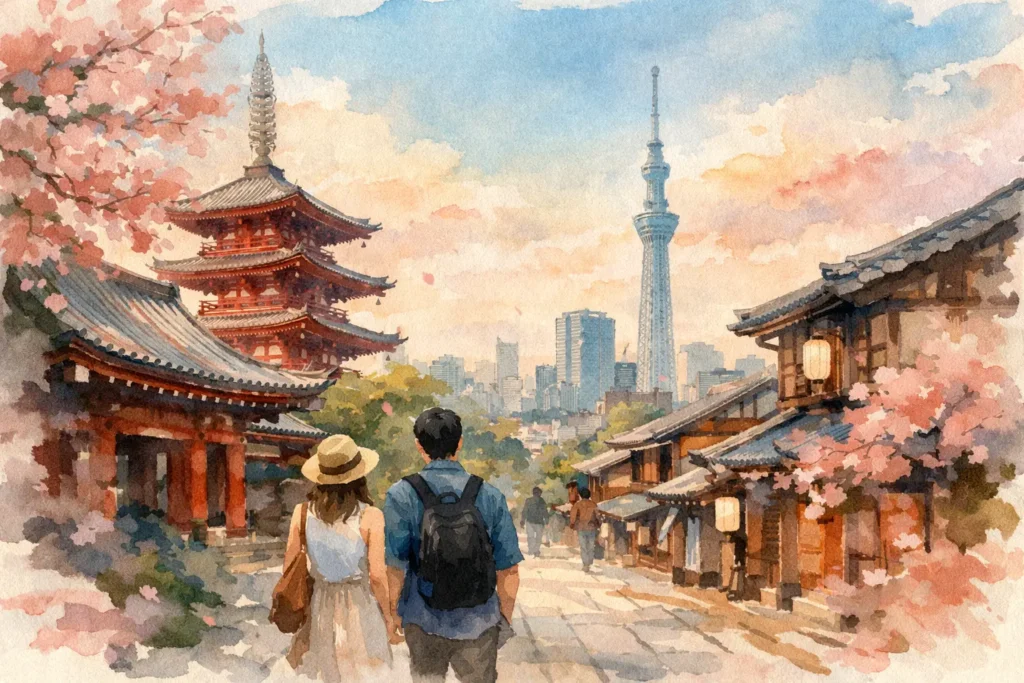
For a more traditional continuation, return to Asakusa on another day and experience Sensō-ji and its surrounding streets. The temple complex, commercial lanes, and Tokyo Skytree visible in the distance reveal another essential Tokyo relationship: historic religious architecture continuing to shape a living neighborhood beneath a modern skyline.
The finest ending to this walk may be the simplest one. Sit beneath the trees along Omotesando, watch the buildings catch the late-afternoon light, and let Tokyo’s architecture become more than a checklist. Here, every facade is part of a larger city rhythm – one that keeps making room for memory, invention, and the next unexpected turn.
![[商品価格に関しましては、リンクが作成された時点と現時点で情報が変更されている場合がございます。]](https://hbb.afl.rakuten.co.jp/hgb/574e87c6.06d9ebbe.574e87c7.0e51aa22/?me_id=1423514&item_id=10000202&pc=https%3A%2F%2Fthumbnail.image.rakuten.co.jp%2F%400_mall%2Ff131164-toshima%2Fcabinet%2Fd_202405%2F53360260_01_web_s.jpg%3F_ex%3D128x128&s=128x128&t=picttext "[商品価格に関しましては、リンクが作成された時点と現時点で情報が変更されている場合がございます。]")