
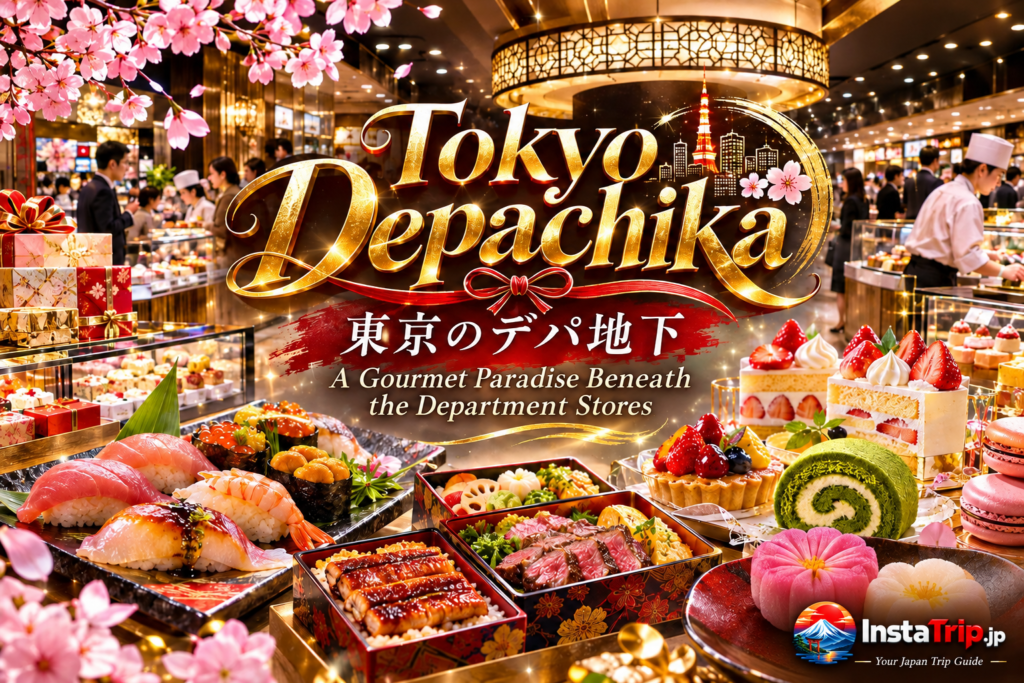
Tokyo depachika shopping begins beneath the city streets, where the fluorescent rush of a department store gives way to polished counters, fragrant grills, jewel-like sweets, and rows of impeccably wrapped gifts. A depachika, short for depāto chika or “department store basement,” is far more than a food court. It is a vivid expression of Japanese food culture: seasonal, regional, precise, generous, and made for both everyday pleasure and meaningful giving.
For travelers, these underground food halls offer one of Tokyo’s most immediate pleasures. You can taste the culinary character of Japan without booking a hard-to-get restaurant, while also watching the city’s rituals of work, hospitality, and gift-giving unfold around you. Come hungry, arrive with a little patience, and let your eyes lead the way.
Tokyo Depachika (デパ地下): Food Tour, Map and Shopping Ideas
デパ地下 (depachika) means the basement food halls of department stores, often selling 弁当 (bentō, boxed meals), 和菓子 (wagashi, Japanese sweets), 惣菜 (sōzai, prepared side dishes) and お土産 (omiyage, gifts or souvenirs). One useful starting point is 銀座三越 (Ginza Mitsukoshi), near Ginza Station.
Watch this 4K walking tour of the Daimaru Tokyo depachika near Tokyo Station, filmed by Video Street View Japan. It shows the food floor and shopping atmosphere. The map below highlights Ginza Mitsukoshi, another popular department-store food hall:

Watch this video on YouTube (if the embedded player is unavailable).
Map: Ginza Mitsukoshi (銀座三越)
For food lovers: explore Japanese wagashi cookbooks on Amazon and Japanese bento boxes.
Depachika Shopping: Quick Visitor Guide
What to try: seasonal bento, prepared side dishes, wagashi, Japanese pickles and regional sweets. What to take home: carefully packaged, shelf-stable omiyage rather than foods that need immediate refrigeration. Check ingredients and expiry dates if you have dietary requirements or a long journey ahead.
Shopping etiquette: check each counter’s photography policy, queue where indicated and avoid eating while walking through crowded retail aisles. Payment methods can vary between counters, so have a backup. For more ideas, continue with our traditional Japanese food guide.

Why Tokyo Depachika Shopping Feels So Special
A depachika brings together specialist shops that might otherwise be scattered across a city: fishmongers and butchers, tea houses, pickle sellers, bakeries, confectioners, sake counters, prepared-food kitchens, and famous regional producers. The range is dazzling, but the real appeal lies in the care behind it. A single strawberry may be selected for its shape and color. A box of wagashi may change its design with the season. A croquette is wrapped so it arrives home still crisp.
This attention has roots in Japan’s long culture of food as a gift. Omiyage, souvenirs chosen for colleagues, friends, or family, are expected to be attractive, shareable, and thoughtfully presented. Depachika counters elevate that idea into an art form. Even if you are buying dinner for one, the experience carries a quiet sense of occasion.
There is also a captivating contrast at work. Tokyo is a city of speed, yet many depachika products celebrate short-lived seasons and painstaking techniques. In spring, look for sakura-colored sweets and bamboo-leaf-wrapped treats. Summer brings chilled noodles, bright fruit jellies, and grilled eel. Autumn means chestnut, sweet potato, persimmon, and mushrooms. Winter counters glow with strawberries, citrus, hot pot ingredients, and elegant year-end gift boxes.
Where to Experience a Tokyo Depachika
The most memorable food halls are usually found in major department stores near large stations, making them an easy stop between neighborhoods or before returning to your hotel. In Shinjuku, Isetan’s food hall is known for its energetic atmosphere and outstanding selection, from refined sweets to ready-to-eat meals. It is a strong choice if you want a polished introduction to Tokyo’s food culture in one concentrated visit.
Nihombashi is especially rewarding for travelers drawn to tradition. Historic department stores such as Mitsukoshi bring a sense of ceremony to the experience, with beautifully presented Japanese confections, tea, and foods connected to long-established makers. The surrounding district, once a mercantile center of Edo, adds another layer of meaning: food, craft, and commerce have met here for centuries.
In Ginza, depachika shopping feels appropriately glamorous. The basement floors of the district’s department stores are ideal for edible gifts, exquisite patisserie, and premium ingredients. This is where to look when presentation matters as much as flavor, whether you are carrying home a box of delicate wagashi or assembling a picnic for a special evening.
For a more local, everyday rhythm, try stores around Ikebukuro, Shibuya, or Tokyo Station. The selection may be just as impressive, but the pace can feel more practical: commuters collecting dinner, office workers buying sweets to share, and families choosing weekend treats. Each location has its own personality, so the best depachika depends on whether you want heritage, luxury, convenience, or sheer variety.
What to Buy Beyond the Obvious
The temptation is to fill a basket with everything, but a good depachika visit becomes more enjoyable when you choose a few categories to explore slowly. Start with a bento, Japan’s carefully composed boxed meal. Department store bento often highlight a particular specialty, such as grilled fish, tempura, sushi, eel, or seasonal vegetables. They are excellent for a hotel-room dinner, a train journey, or a picnic in a nearby park, although it is wise to eat seafood and other chilled items promptly.
Then visit the wagashi counters. These traditional Japanese sweets are often paired with tea and reflect nature through color, shape, and texture. You may find soft mochi, bean-paste-filled dorayaki, pressed sugar sweets, or namagashi, delicate fresh confections that resemble flowers, leaves, or tiny landscapes. Not every wagashi is suited to a long flight, so ask about the best-by date before buying gifts.
Prepared foods, known as sozai, reveal another side of the depachika. Look for simmered vegetables, crisp karaage chicken, yakitori, salads, gyoza, tofu dishes, and golden korokke. A meal assembled from several counters is one of Tokyo’s great small luxuries. Pair a few dishes with rice, pickles, and a drink, and you have a vibrant feast with no reservation required.
Do not overlook regional specialties. Department stores frequently host limited-time food events featuring producers from across Japan, allowing you to sample flavors from Hokkaido, Kyushu, Kyoto, Okinawa, and beyond. These events can be crowded, but they offer a delicious glimpse of the country’s regional identities. If a counter has a line, it may be worth joining it, especially when the item is being made or served fresh.
Finally, save room for fruit. Japanese department store fruit counters are famously immaculate, displaying melons, peaches, grapes, and strawberries with remarkable visual precision. Premium fruit can be expensive, sometimes surprisingly so, because it is often intended as a formal gift. For a traveler, it is less about finding a bargain and more about experiencing the extraordinary care given to an ingredient at its peak.
How to Shop with Confidence
Depachika are welcoming, but they can be busy, particularly after work and before holidays. Take one complete lap before buying anything. This helps you understand the layout and prevents the classic problem of purchasing too much too early, only to discover an even more tempting counter around the corner.
When you are ready to order, point politely or use the display number if one is shown. Staff are accustomed to careful requests and may ask whether an item is for yourself or a gift. If you are choosing something as omiyage, mention the number of people it is for. A boxed assortment is often easier to share than one large item, and the staff can advise on shelf life.
Keep an eye on packaging and temperatures. Room-temperature cookies, crackers, tea, and many sealed sweets travel well. Fresh cakes, chilled desserts, bento, and raw seafood are best enjoyed in Tokyo. If your hotel room has limited refrigeration, buy only what you can comfortably eat that day.
Photography rules vary by store and counter. Some displays are beautiful enough to feel like galleries, but it is courteous to check for signs and avoid photographing staff or other shoppers without permission. The same attentiveness applies at tasting counters: accept samples only if you are genuinely considering the product, and do not block the counter while deciding.
A Depachika Dinner Worth Planning Around
One of the best ways to turn a visit into an experience is to build a dinner around a neighborhood. After an afternoon in Shinjuku’s gardens, assemble a bento-and-sweets meal before returning to your accommodation. Following a walk through Ginza’s galleries and luminous streets, choose sushi, seasonal salads, and a small pastry to enjoy at a hotel table. Near Tokyo Station, pick up a carefully packed meal for the shinkansen or an evening train.
The key is not to treat the depachika as a rushed errand. Let it be part of the day’s discovery. Notice the small exchanges between customers and staff, the seasonal decorations, the disciplined arrangement of every tray, and the way familiar foods are given new refinement. This is Tokyo at its most dynamic and intimate at once.
Leave a little space in your suitcase, but also leave room for spontaneity. The perfect depachika purchase may be a famous box of sweets, a warm croquette eaten the same afternoon, or an unfamiliar seasonal delicacy that catches your eye and becomes one of the flavors you remember most.