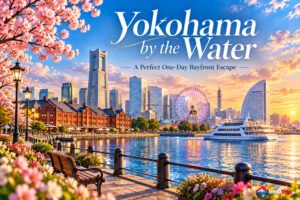

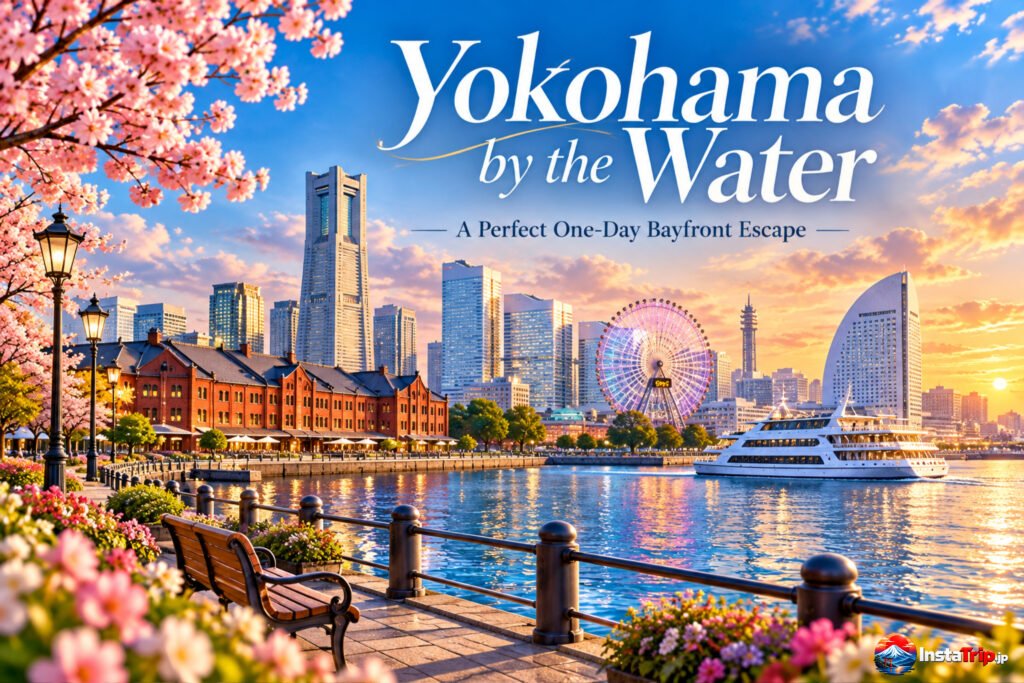
Yokohama (横浜) is a port city best understood at walking pace, when salt air, red-brick warehouses, ocean liners, public gardens, and glass towers appear within the same view. This Yokohama waterfront itinerary guide follows the harbor from its historic gateways to its dazzling modern skyline, creating a full day that feels both practical and richly connected to the story of Japan’s opening to the world.
Rather than treating the waterfront as a single attraction, let it unfold in chapters. Begin where the city faces the bay, move through the old port district, and finish amid the lights of Minato Mirai (みなとみらい). The route is flexible, but its order reveals Yokohama’s most fascinating contrast: a city shaped by international exchange that has never stopped imagining its future.
Morning: Yamashita Park (山下公園) and Yokohama’s Harbor Story
Start at Yamashita Park, an elegant waterfront promenade that stretches beside Yokohama Port. The park was created after the devastation of the 1923 Great Kanto Earthquake, using reclaimed land from the rubble. That origin gives its calm lawns, fountains, and rose beds an added resonance. It is not simply a scenic pause by the water, but a landscape shaped by recovery and civic renewal.

Arrive early, when local walkers and runners pass beneath the trees and the harbor has a quieter, more reflective mood. From the promenade, look across the water toward the Bay Bridge and the ships moving through one of Japan’s most significant ports. Yokohama opened to foreign trade in 1859, and its waterfront became a vital threshold between Japan and the wider world. The city grew quickly through trade, industry, and cultural exchange, leaving traces that remain visible throughout the day.
Beside the park, the Hikawa Maru (氷川丸) is a memorable introduction to that maritime history. This historic ocean liner, now preserved as a museum ship, evokes the era when sea travel connected Yokohama with the Pacific. Step aboard if maritime design and early 20th-century interiors interest you. If your time is limited, viewing its graceful black-and-white silhouette from the park still adds a powerful visual note to the morning.
A short walk brings you to Osanbashi Pier (大さん橋). Even if no cruise ship is docked, visit for its remarkable rooftop deck. Its flowing timber surface rises and folds like a gentle wave, blurring the line between architecture, public space, and harbor. From here, the panorama is magnificent: Yamashita Park on one side, the industrial port beyond, and Minato Mirai’s towers ahead. It is one of the best places to see how Yokohama balances the working life of a major harbor with an unusually open, people-centered shoreline.
Midday: Red Brick Warehouses and Creative Port Culture
Continue northwest toward Yokohama Red Brick Warehouse (横浜赤レンガ倉庫), allowing time to wander rather than rushing directly there. The route carries you through a district where docks and customs facilities once handled goods arriving from overseas. The brick buildings, constructed in the early 20th century, were part of the port’s infrastructure before being thoughtfully adapted into shops, galleries, restaurants, and event spaces.
This is a useful stop for lunch, especially if you want choices in one place. The food halls and restaurants are convenient, though they can feel busy on weekends and holidays. For a more atmospheric meal, choose a table with harbor views or take something simple outside when the weather is pleasant. The point is less to chase one famous dish than to enjoy the setting: historic brick, wide open sky, and the changing activity of the waterfront.
The warehouses also show a pattern seen across Yokohama. Buildings that once supported trade now host contemporary culture, allowing the city to preserve its industrial past without turning it into a frozen museum. Seasonal markets, art events, and winter illuminations often bring extra energy here, so the exact mood changes throughout the year.
If you are traveling with children, or simply enjoy playful design and food culture, the nearby CupNoodles Museum Yokohama (カップヌードルミュージアム 横浜) can fit naturally into this section of the day. Its exhibits trace the inventive spirit behind instant noodles, a globally familiar Japanese food with roots in postwar innovation. It is a strong choice on a rainy afternoon. Travelers more interested in architecture and city views may prefer to keep walking toward Minato Mirai instead.
Afternoon: Minato Mirai’s Dynamic Skyline
Minato Mirai means “Harbor of the Future,” and the name captures the district’s ambition. Developed on former shipyard and rail-yard land, this waterfront zone presents a very different Yokohama: broad promenades, contemporary museums, shopping complexes, hotels, and high-rises gathered around the bay. Yet the shipbuilding history beneath its polished surface is still part of the place’s identity.
Walk past the Cosmo Clock 21, the giant Ferris wheel that has become one of Yokohama’s most recognizable landmarks. A ride is worthwhile if clear weather gives you good visibility, but it is not essential. The surrounding walkways offer equally compelling views, particularly when the wheel’s lights begin to glow after sunset.
For an artistic detour, spend time at the Yokohama Museum of Art area and the surrounding public spaces, which give the district a more contemplative rhythm. Exhibition schedules vary, so regard a museum visit as an option rather than the backbone of the itinerary. Minato Mirai works best when you leave room for small discoveries: reflections of towers in canals, a harbor breeze between buildings, or the sudden appearance of an old dock beside a futuristic hotel.
This is also the right moment to decide how much shopping belongs in your day. Landmark Plaza and the surrounding complexes are convenient for a coffee, a rest, or browsing Japanese design goods. But if you have come for Yokohama’s atmosphere rather than retail, resist spending the entire afternoon indoors. The waterfront promenades are the district’s real stage.
Evening: Sunset Views and a Different Kind of City Light
As daylight softens, make your way to the area around the Yokohama Air Cabin or the promenade near Hammerhead for changing views across the harbor. The city becomes especially captivating at blue hour, when the sky retains color and the Ferris wheel, towers, and bridges begin to shine. Photography enthusiasts should arrive before sunset and stay through the first hour of darkness, when the contrast between water and architecture is at its most dramatic.
For dinner, the choice depends on the kind of evening you want. Minato Mirai offers polished dining with skyline views and an easy return to the station. For more historic atmosphere, head back toward the Kannai and Yamashita Park side of the waterfront, where the streets feel more intimate and the city reveals its older layers. Yokohama Chinatown (横浜中華街) is also nearby if you want a lively final meal, though it sits just beyond the waterfront route and deserves time of its own rather than a rushed stop.
Do not overlook the simple pleasure of ending at Osanbashi again. At night, its broad deck feels wonderfully open, with the illuminated skyline arranged across the water. It is a quiet counterpoint to the bright entertainment districts and a fitting place to appreciate Yokohama’s scale.
A Practical One-Day Yokohama Waterfront Route
Start near Motomachi-Chukagai Station (元町・中華街駅) and finish near Sakuragicho Station (桜木町駅) or Minatomirai Station (みなとみらい駅). This order keeps the walk moving along the waterfront. The schedule below is a suggested pace: allow extra time for exhibitions, meals and photographs.
| Part of the day | Suggested stops | Planning tip |
|---|---|---|
| Morning | Yamashita Park and Hikawa Maru | Enjoy the public park first; enter the museum ship only if its opening schedule fits. |
| Late morning and lunch | Osanbashi Pier and the Red Brick Warehouses | Check rooftop access notices and leave time for lunch or a waterfront break. |
| Afternoon | Minato Mirai and one indoor attraction | Choose a museum or an activity instead of trying to visit every attraction. |
| Evening | Waterfront views around Minato Mirai | Stay for the changing light, then use a nearby station for your return. |
Opening Days and Museum Activities
NYK Hikawa Maru’s official visitor information lists opening hours of 10:00–17:00, with last admission at 16:30. It normally closes on Mondays; when Monday is a national holiday, the closure moves to the following working day. Check for temporary closures before planning your visit.
The CUPNOODLES Museum Yokohama visitor guide lists opening hours of 10:00–18:00, with last admission at 17:00. It normally closes on Tuesdays, with holiday exceptions, and during the year-end/New Year period. Museum admission and factory activities are separate: the Chicken Ramen Factory requires a reservation, while My CUPNOODLES Factory requires a numbered ticket. An indoor visit is a useful rainy-day option, but an activity place is not guaranteed just because the museum is open.
Watch: A Yokohama Waterfront Walk
This JAPAN WALKING video follows an alternative route from Yokohama Station to the Red Brick Warehouses, passing through Minato Mirai. Filmed in July 2025, it has no narration and uses real city sounds. It gives a preview of the waterfront atmosphere rather than reproducing every stop in the itinerary above.
Watch the Yokohama walk on YouTube.
Yokohama Waterfront Itinerary FAQ
Can I explore the waterfront in one day?
Yes. The park, pier, warehouses and Minato Mirai make a coherent day out. Choose one major indoor attraction if you want time for meals and a relaxed walk.
Is the whole itinerary free?
No. You can enjoy the waterfront scenery without buying attraction tickets, but the museum ship, museum activities, rides and meals have their own charges. Check each venue before booking.
What should I change when it rains?
Shorten exposed waterfront sections and spend more time indoors. Check museum closure days and activity availability before relying on a particular stop.
Can I combine Yokohama and Yokosuka in the same day?
You could make brief visits to both, but this waterfront route works better as its own day. For another day around Tokyo Bay, see our Yokosuka City guide to Sarushima, Mikasa and the harbor.
Useful walking-day items (paid links): A lightweight daypack and a compact travel umbrella can be useful if you need them; use suitable items you already own.
Practical Notes for This Yokohama Waterfront Itinerary Guide
The itinerary is walkable, but it covers a considerable distance. Comfortable shoes matter, especially because the most rewarding moments happen between major sights. Sakuragicho Station is a convenient starting point for Minato Mirai, while Motomachi-Chukagai Station places you near Yamashita Park. Either direction works, although beginning at Yamashita Park creates the clearest historical-to-modern progression.
Give the route a full day if you plan to enter museums, ride the Ferris wheel, or linger over meals. Travelers with only half a day should choose either the Yamashita Park, Osanbashi, and Red Brick section for harbor history, or Minato Mirai for contemporary architecture and evening views. The two experiences are close geographically but distinct in character.
Yokohama’s waterfront is enjoyable year-round, though each season changes its personality. Spring brings fresh greenery and roses around Yamashita Park; summer nights feel festive but humid; autumn often offers crisp walking weather; and winter light can make the skyline exceptionally clear. On rainy days, the Red Brick Warehouse, museums, and indoor complexes provide useful shelter, but keep one short harbor walk in the plan. The water and sky are central to the experience.
When you leave the final viewpoint, pause before heading back to the station. Yokohama’s waterfront is most memorable not because it offers one perfect postcard, but because every glance holds another conversation between the port’s past and Japan’s forward-looking imagination.