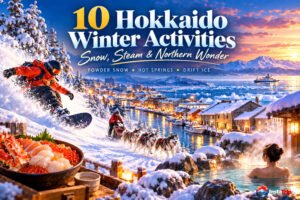

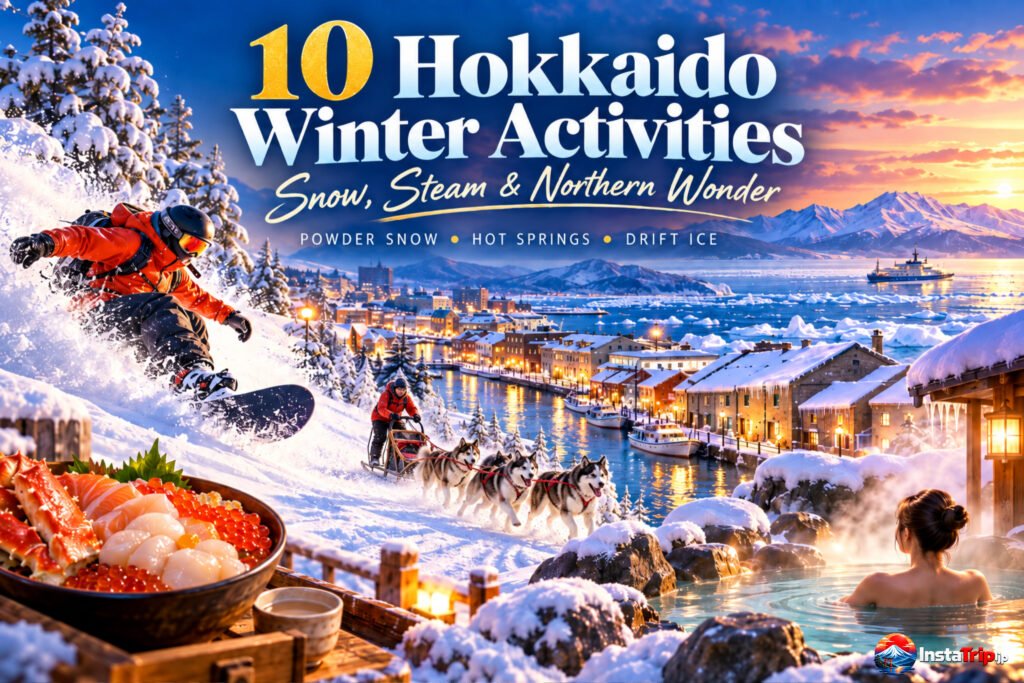
The first deep snowfall changes Hokkaido (北海道) into a brilliant, hushed landscape: roofs soften beneath white drifts, bare birch forests glow silver, and volcanic steam rises into intensely cold air. The best Hokkaido winter activities are not limited to skiing. They reveal a northern Japan shaped by snow, fire, craftsmanship, and seasonal rituals that make winter feel less like an obstacle and more like a destination in itself.
Winter generally runs from December through March, though conditions vary widely across this vast island. Sapporo (札幌) is lively and accessible, Niseko (ニセコ) is famous for deep powder, eastern Hokkaido is home to drift ice and wildlife, and the south offers historic streets framed by snow. A thoughtful itinerary balances high-energy days outdoors with slow evenings in an onsen (温泉, hot spring), a warm bowl of ramen (ラーメン), or a quietly illuminated townscape.
Hokkaido Winter Activities Beyond the Ski Slopes
1. See Sapporo Snow Festival after dark
During the early-February festival, Sapporo’s Odori Park (大通公園) becomes an open-air gallery of monumental snow and ice sculpture. Teams carve fantastical architecture, animals, characters, and intricate scenes from vast blocks of compacted snow, while smaller works bring a handmade intimacy to the festival grounds. At night, projected light and color give the sculptures a changing, theatrical presence.

The festival began in 1950, when local high school students created snow statues in Odori Park. What started as a modest winter event became one of Japan’s most recognized seasonal celebrations, yet its appeal remains wonderfully simple: a city responding creatively to the landscape that defines it. Expect significant crowds, especially on weekends, and dress for standing outside longer than you think.
2. Ski Hokkaido’s famous powder snow
Hokkaido’s light, dry snow has made resorts such as Niseko, Furano (富良野), Rusutsu (留寿都), and Kiroro (キロロ) internationally celebrated. Cold air traveling across the Sea of Japan gathers moisture and releases it over the island’s mountains, creating frequent snowfalls and the soft powder conditions skiers and snowboarders seek.
Niseko has the broadest international atmosphere, with extensive terrain and a lively dining scene. Furano often suits travelers who want a more relaxed resort town and central access to other parts of the island. Rusutsu is particularly appealing for varied runs and families, while Kiroro is known for abundant snow and a quieter mountain setting. The right choice depends less on reputation than on whether you want nightlife, lessons, family facilities, or long uncrowded days on the mountain.
3. Soak in an onsen surrounded by snow
A hot spring is one of winter’s most memorable contrasts: the sharp cold on your face, mineral-rich water warming your body, and snow resting on dark volcanic stone. Noboribetsu Onsen (登別温泉), one of Hokkaido’s best-known hot spring towns, is especially atmospheric in winter. Its nearby Jigokudani (地獄谷), or Hell Valley, sends sulfurous steam from dramatic volcanic ground, a reminder that Hokkaido’s warmth comes from deep beneath the surface.

For a more secluded mood, consider a traditional ryokan (旅館) in Jozankei (定山渓) near Sapporo, Lake Toya (洞爺湖), or the eastern hot spring communities around Akan (阿寒) and Kawayu (川湯). Onsen etiquette matters. Wash thoroughly before entering the bath, keep towels out of the water, and speak softly. These are communal places of rest, not swimming pools, and following the rhythm of the bath is part of the experience.
4. Explore the candlelit winter streets of Otaru (小樽)
Otaru’s canal, brick warehouses, and old merchant buildings evoke the era when the port helped connect Hokkaido to wider trade routes. In winter, snow gathers along the water and on gas lamps, bringing a cinematic stillness to the historic district. During the Otaru Snow Light Path Festival, typically held in February, candles and small snow lanterns illuminate the canal and side streets.
The city is also a fine place to slow down between outdoor adventures. Browse glassware workshops, taste local seafood, and step into a cafe inside a preserved building. Otaru is easy to reach from Sapporo, but staying until evening is worthwhile. The atmosphere shifts completely once the lights appear against the snow.
5. Cruise beside drift ice in the Okhotsk Sea
Along the coast of Abashiri (網走) and Monbetsu (紋別), drift ice (流氷, ryuhyo) arrives from the Amur River region each winter, creating one of Japan’s most extraordinary natural spectacles. From late January into March, depending on weather and currents, sightseeing vessels travel into the shifting white expanse of the Sea of Okhotsk. The sight is immense and elemental: fractured ice plates extending toward a pale horizon, sometimes carrying seals or sea eagles.
Drift ice cruises are weather-dependent, so build flexibility into an eastern Hokkaido itinerary. Even when conditions are not ideal, the museums, coastlines, and fishing-town character of the region offer a powerful sense of place. This is a remote part of Japan, and that distance is precisely its appeal.
6. Watch red-crowned cranes dance at dawn
Eastern Hokkaido is a refuge for the red-crowned crane, known in Japanese as tancho (丹頂). With their white plumage, black wing markings, and vivid red crowns, the birds are among Japan’s most revered wildlife symbols. In winter, photographers gather near feeding sites around Tsurui and Akan before sunrise, hoping to witness pairs calling, bowing, and moving through ritualized courtship dances over the snow.
The cranes were once close to disappearing in Japan, but conservation efforts helped restore the population. Observe from designated areas, keep voices low, and do not chase a closer image. The most meaningful encounter comes from allowing the birds their distance and watching the landscape on their terms.
7. Explore the Okhotsk Ryuhyo Museum
The Okhotsk Ryuhyo Museum (オホーツク流氷館) in Abashiri introduces the frozen sea through exhibits, a drift-ice experience room and views from Mount Tento (天都山). It offers an indoor option when a cruise changes route or is cancelled. Check opening notices and transport before heading uphill.
Use the visit to understand how sea ice shapes the coast and its marine life, then leave time for Abashiri’s waterfront and local food. Pairing an indoor attraction with a weather-dependent cruise gives an eastern Hokkaido itinerary more flexibility.
8. Taste winter comfort food in Sapporo
After a day outdoors, Sapporo’s food scene feels like a reward. Miso ramen is the city’s iconic warming bowl, often enriched with butter, corn, vegetables, and fragrant pork broth. Soup curry, another Sapporo specialty, combines a spiced, aromatic broth with tender chicken and large seasonal vegetables. It is warming without being heavy, and every restaurant has its own character.
Winter is also prime time for Hokkaido seafood. Crab, scallops, salmon roe, and sea urchin appear in markets and small restaurants across the island, though availability changes by season and region. Try local dishes with curiosity rather than treating them as a checklist. A simple counter meal near a station can be as memorable as a celebrated reservation.
9. Visit the ice sculptures at Lake Shikotsu (支笏湖)
Near New Chitose Airport (新千歳空港), the Lake Shikotsu Ice Festival creates luminous structures from lake water sprayed and frozen into tunnels, towers, and textured blue formations. By day, the ice catches the winter light in shades of white and sapphire. By evening, illumination transforms the site into a captivating frozen landscape.
Lake Shikotsu is a caldera lake of striking clarity, set among forested mountains and volcanic terrain. The festival is an easy addition at the beginning or end of a Hokkaido trip, particularly for travelers who want a winter spectacle without committing to a long journey north or east.
10. Encounter Ainu culture with care and context
Hokkaido is the ancestral homeland of the Ainu, an Indigenous people with distinct language, spiritual traditions, arts, and cultural practices. Near Lake Poroto (ポロト湖) in Shiraoi (白老), Upopoy (ウポポイ), the National Ainu Museum and Park, presents exhibitions and performances that introduce Ainu history and living culture through contemporary voices.
This is not a winter activity in the same sense as skiing or snowmobiling, but it may be the experience that most changes how you understand the island. Give it time. Hokkaido’s identity cannot be separated from the histories of the people who have lived with its rivers, forests, salmon runs, and severe winters for generations.
Best Time for Hokkaido Winter Activities
Updated for winter 2026–2027. Choose dates around the experience you want most. Festival dates are fixed; snow, sea ice and transport conditions vary.
| Experience | When to plan | What to check |
|---|---|---|
| Sapporo Snow Festival (さっぽろ雪まつり) | February 4–11, 2027 | Official schedule; reserve accommodation early. |
| Otaru Snow Light Path (小樽雪あかりの路) | February 6–13, 2027 | Official dates; confirm evening return transport. |
| Skiing and snowboarding | Resort-specific winter season | Lift status, snow reports, lessons and equipment availability. |
| Abashiri drift ice | Often mid-February to early March | Daily ice and sailing conditions; sightings are not guaranteed. |
| Onsen, food and cultural visits | Throughout winter, subject to opening calendars | Holiday closures, bath access and reservation requirements. |
The Aurora cruise operator explains that its large ship may switch to a sea sightseeing route when drift ice is absent, while Aurora III can be suspended. Check your booked vessel and the day’s operating notice, and keep an indoor alternative.
Choose a Winter Route That Fits Your Trip
For a first visit, group Sapporo, Otaru and nearby hot springs together. Give eastern Hokkaido its own overnight stays rather than treating Abashiri or crane-viewing sites as quick Sapporo day trips. Use JR Hokkaido’s timetable and operation information, check the last return service and allow a buffer before flights.
If you lack winter-driving experience, compare trains, resort transfers and guided excursions before renting a car. Our Hokkaido road trip guide helps with route planning, and our ryokan booking guide explains what to check before reserving a hot-spring stay.
At Niseko, follow the official resort rules: never duck boundary ropes, enter closed gates or ski prohibited areas. Beginners should book lessons and choose suitable resort runs. Walking on sea ice requires an organized activity with appropriate equipment and local guidance; do not venture onto it independently.
Hokkaido Winter Activities: Frequently Asked Questions
Can I enjoy Hokkaido in winter without skiing?
Yes. Festivals, Otaru walks, onsen, winter food, museums and Ainu cultural experiences offer plenty of variety. Keep indoor options for poor-weather days.
Is February a good month for a first trip?
It suits travelers who want the main Sapporo and Otaru festivals. Match your booking to the announced dates and prepare for busy accommodation periods and cold outdoor evenings.
Is drift ice guaranteed on a cruise?
No. Wind and tides move the ice. A sailing may encounter open water, change route or be cancelled, so leave flexibility in your eastern Hokkaido itinerary.
Do I need a rental car?
Not for every route. Sapporo and Otaru can be explored using public transport. Remote wildlife locations and scattered eastern attractions need more detailed transfer planning or guided tours.
Useful Items for Winter Sightseeing
Prioritize warm layers and footwear suitable for icy streets. If needed, compare insulated waterproof winter boots and thermal touchscreen gloves (paid links). Check fit and materials before buying.
Planning a Winter Trip to Hokkaido
Choose your base according to your priorities. Sapporo works well for festivals, food, Otaru, and day trips to Jozankei. Niseko, Furano, or Rusutsu make sense for snow sports. Abashiri, Monbetsu, Tsurui, and Akan deserve several days if drift ice and wildlife are your focus, since winter weather can alter transportation plans.
Trains connect major cities, but distances are longer than they appear on a map, and some of the most rewarding eastern destinations are easier with a rental car. Road conditions require confidence, winter tires, and flexibility. If driving is not for you, plan around rail connections and guided excursions rather than trying to cover the whole island at speed.
Pack insulated waterproof boots, warm socks, gloves, a hat that covers your ears, and layers that can handle both freezing streets and overheated indoor spaces. Most of all, leave room in the schedule for weather. A delayed train, a sudden snowfall, or a clear blue morning after a storm may become the moment you remember most. In Hokkaido, winter rewards travelers who let the season set the pace.