

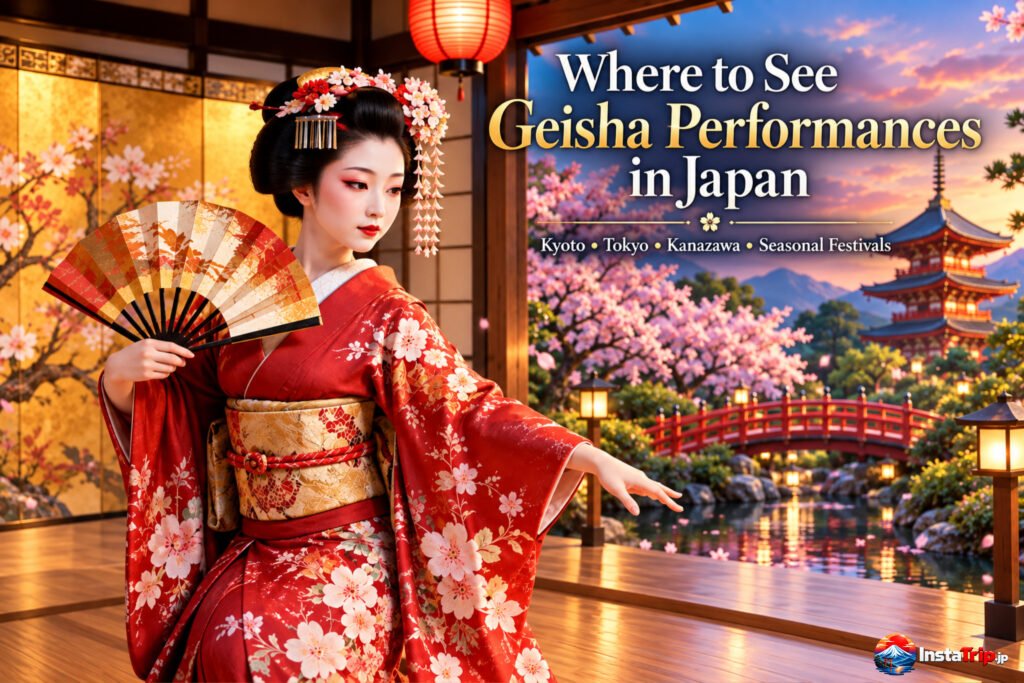
A geisha performance can begin with something almost imperceptible: the measured turn of a sleeve, the first clear note of a shamisen, a fan opening against a painted stage. For travelers wondering where to see geisha performances in Japan, the most rewarding answer is not simply a neighborhood or a ticket. It is choosing a setting that presents an enduring living art with care, context, and respect.
The word geisha is widely used internationally, but local language matters. In Kyoto, geisha are usually called geiko, while their apprentices are maiko. Tokyo also has an active geisha tradition, often using the term geigi. Their work includes dance, music, conversation, and the refined hospitality of traditional banquets. A public performance offers a rare, accessible window into these arts without intruding on the private worlds in which they have long been practiced.
Where to See Geisha Performances: Quick Booking Guide
The most practical choices are Kyoto’s Gion Corner for a short introduction, a seasonal Kyoto dance recital for a larger stage production, Asakusa’s scheduled ozashiki performances in Tokyo, or a reserved teahouse event in Kanazawa. Book a performance rather than relying on a chance encounter in the street.
Schedules and published prices checked on October 4, 2026. Dates below apply to the stated season; confirm availability and booking conditions before paying.

| Performance | Dates and format | Published price and booking |
|---|---|---|
| Gion Corner, Kyoto | Regular shows at 18:00 and 19:00, about 50 minutes; several traditional arts including maiko dance. Winter has a reduced calendar. | Standard adult ¥5,500; premium ¥6,600. Official schedule and tickets. |
| Gion Odori, Kyoto | November 1–10, 2026, at Gion Kaikan; 13:30 and 16:00, about one hour. | ¥6,000, or ¥7,000 with tea ceremony. Gion Higashi official booking information. |
| Miyako Odori, Kyoto | Next announced season: April 1–30, 2027, at Gion Kobu Kaburenjo; 12:30, 14:30 and 16:30. | ¥5,000 second class; ¥7,000 first class; ¥8,000 first class with tea. Sales scheduled from January 6, 2027, at 10:00 Japan time. Official 2027 information. |
| Asakusa Geisha Ozashiki Odori, Tokyo | Remaining autumn 2026 dates: October 17, 24 and 31; November 7 and 14. Shows at 13:00 and 14:30, Asakusa Culture Tourist Information Center, sixth floor. | ¥6,000 reserved seating. Organizer’s ticket listing (Japanese). |
| Geisha Evenings at Kaikaro, Kanazawa | Selected dates within September 28–November 30, 2026; performance and building tour, 17:00–18:30. | From ¥14,000; advance reservation required. Kaikaro official experience page and event calendar. |
Gion Corner is a mixed cultural program, so the entire show is not devoted to geisha dance. A teahouse building visit or kimono dressing activity also does not automatically include a professional performance. For a Tokyo trip outside these dates, check Shinbashi’s official Azuma Odori website for the next announced season rather than assuming daily availability.
Kyoto: The Classic Place to See Geiko and Maiko
Kyoto is the city most closely associated with geiko and maiko, and its five historic hanamachi, or geisha districts, remain captivating centers of traditional culture. Gion Kobu, Pontocho, Miyagawacho, Kamishichiken, and Gion Higashi each have their own character, dance traditions, and annual calendar.
For most visitors, seasonal dance recitals are the finest introduction. These large-scale productions bring together geiko and maiko in exquisite kimono, performing choreographed dances shaped by Kyoto’s changing seasons, classical literature, and local aesthetics. The experience is more theatrical than an intimate banquet, but that is exactly why it works so well for first-time visitors: it is designed for a public audience and gives the artistry room to shine.
Spring is particularly vibrant. Miyako Odori, associated with Gion Kobu, is among Kyoto’s best-known dance performances, while other districts stage their own annual programs, including Kyo Odori, Kamogawa Odori, Kitano Odori, and Gion Odori at different points of the year. Dates, venues, and formats can change, so travelers should check the current season’s schedule before building an itinerary around one event.

A performance in Kyoto is also an invitation to notice details beyond the stage. The rhythm of the shamisen, the restrained storytelling of dance, and the seasonal motifs on a kimono are all part of a visual language developed over generations. Arrive early enough to absorb the atmosphere rather than treating the evening as a quick item between temples and dinner.
Gion Corner and Other Introductory Shows
For travelers whose Kyoto dates do not align with a major dance season, introductory cultural programs can be a practical alternative. Gion Corner has long presented a compact program of traditional Kyoto arts, which may include a maiko dance alongside tea ceremony, flower arrangement, or puppet theater. The format is shorter and less immersive than a district’s annual recital, yet it can be a valuable first encounter with multiple art forms in one evening.
Some hotels, cultural venues, and established experience organizers also host maiko or geiko dance events paired with dinner, tea, or a cultural explanation. These vary considerably. Look for programs that clearly identify the performers, explain what is included, and avoid promising a manufactured version of private entertainment.
Tokyo: Where to See Geisha Performances Beyond Kyoto
Tokyo’s geisha culture is less visible to many international visitors, but it is very much part of the capital’s cultural landscape. The city’s traditional hanamachi developed around neighborhoods such as Asakusa, Kagurazaka, Shinbashi, Akasaka, and Mukojima. Here, polished music and dance traditions continue alongside one of the world’s most dynamic urban environments.
Public dance events in Tokyo often appear in spring or autumn and may be connected to a particular district’s geigi association. Asakusa, with its historic entertainment heritage and proximity to Sensō-ji, is one of the most accessible areas to watch for seasonal programs. Shinbashi is known for its elegant annual dance presentation, while Kagurazaka can offer a more intimate, atmospheric perspective on old Tokyo.
Tokyo is an excellent choice for travelers who want to place traditional performance within a broader city itinerary. An afternoon among Asakusa’s temple lanes, followed by an evening performance, creates a compelling contrast: incense, lanterns, theater lights, and the measured sounds of classical music all within a district that remains energetically alive.
It does, however, require planning. Public programs may be less frequent than Kyoto’s famous seasonal dances, and tickets can sell out. If seeing geigi is a priority, organize your dates around a confirmed event rather than assuming that a walk through a hanamachi will lead to a performance.
Kanazawa: An Intimate Encounter in a Teahouse District
Kanazawa offers one of Japan’s most atmospheric alternatives to Kyoto. Its three preserved chaya districts, especially Higashi Chaya, evoke the elegant world of traditional entertainment through wooden facades, latticed windows, and softly lit streets. The city’s geisha are also known as geigi, and their music and dance traditions have their own regional identity.
Kanazawa is particularly appealing for travelers looking for a quieter, more intimate cultural experience. Certain teahouses and cultural programs occasionally offer performances or presentations for visitors, sometimes with an explanation of the instruments, dances, and etiquette involved. Availability is limited and often reservation-based, which makes advance planning essential.
The trade-off is simple: Kanazawa may not offer the volume of major public productions found in Kyoto, but it can feel more personal. Pairing a performance with the city’s gardens, samurai districts, crafts, and celebrated food culture reveals a different side of Japan’s traditional arts – one shaped by the former castle town’s refined merchant culture.
Festivals and Special Events Across Japan
Seasonal festivals can create unexpected opportunities to see geisha and geiko arts outside a formal theater. In some historic cities and hot spring towns, local entertainers appear in parades, dance events, or cultural celebrations. These occasions can be magnificent, especially when traditional music is framed by lantern-lit streets, autumn foliage, or spring blossoms.
Festival appearances are not a substitute for a dedicated recital. Viewing angles can be limited, crowds are common, and programs may focus on a procession rather than a full dance. Still, they offer a vivid sense of how traditional entertainment remains connected to place, season, and community.
When researching an event, use the specific city and season rather than searching only for geisha. Terms such as geiko dance, maiko dance, odori, hanamachi, or geigi can reveal programs that broad travel searches overlook. Confirm details close to departure, since annual schedules are occasionally adjusted.
How to Choose a Respectful Experience
The best performance is not always the most exclusive one. Public recitals are usually the clearest, most respectful choice because they support established artistic traditions and welcome audiences openly. They also let visitors enjoy the performance without placing private professionals in an uncomfortable spotlight.
Avoid treating Kyoto’s narrow streets as a stage. Geiko and maiko traveling to and from appointments are working, and following, blocking, or photographing them without consent is discourteous. Instead, save your camera for permitted theater interiors, public streets, and the remarkable architecture of the districts themselves.
Before booking any dinner or private-style experience, consider what you are being offered. A credible program should be transparent about its price, location, duration, performers, and photography policy. It should present geisha arts as skilled professional traditions, not as a costume or novelty. A few basic phrases of courtesy, quiet attention during the dance, and an open-minded willingness to learn will go much further than trying to recreate a movie scene.
Booking Details That Make a Difference
- Choose the experience: a public recital emphasizes stage dance and music; an ozashiki event can include games and conversation. Check whether a meal, tea or interpretation is actually included.
- Check the calendar: Gion Corner lists winter performances Tuesday–Friday from December 1 to March 11, excluding public holidays, and closures on July 16, August 16 and December 26–January 4. Use its official calendar for your exact date.
- Read the ticket conditions: Gion Odori’s 2026 online sales are listed through October 28. Its official page explains the ticket exchange number sent after purchase. Asakusa’s autumn listing states that bookings cannot be canceled, changed or refunded.
- Arrange suitable seating: Asakusa offers mostly floor-cushion seating, with limited chair seats. Travelers needing a chair or wheelchair access should follow the universal-seat instructions and contact the venue ahead of time.
- Follow the photography rules: Asakusa prohibits photography, recording and filming during the performance, while its listed package includes a commemorative photo afterward. Permission at one event does not apply at another.
For a relaxed itinerary, leave time between sightseeing and the show. Pair your confirmed Asakusa booking with our Asakusa guide, and prepare your payment backup using our Japan cash and card guide.
Watch: Maiko Perform Gion Kouta in Kyoto
Watch a performance of Gion Kouta by maiko from Gion Higashi at Konkaikomyoji Temple in Kyoto, filmed by KYOTO TRADITION. The recording focuses on the dance and musical accompaniment, offering a closer look at the art before you book a live performance.
Watch the performance on YouTube.
Useful Japanese Words for Your Visit
芸者 (geisha) refers to a professional traditional entertainer; 芸妓 (geiko or geigi, depending on the region) is another term you will see. In Kyoto, 舞妓 (maiko) are apprentices. 踊り (odori) means dance, while お座敷 (ozashiki) refers to the tatami-room setting associated with traditional entertainment. These terms help you find the right event rather than a costume experience.
写真を撮ってもいいですか? Shashin o totte mo ii desu ka? means “May I take a photo?” Ask the host before using your camera, and respect a refusal.
What to Bring to a Performance
Keep your bag compact, silence your phone and have your booking confirmation ready. A small notebook can help you remember unfamiliar instruments or dance titles afterward; a Japanese phrasebook can help with simple courtesy at the venue.
Useful travel items (paid links): Pocket travel notebooks · Japanese travel phrasebooks.
Frequently Asked Questions About Geisha Performances
Can tourists see a geisha performance without an introduction?
Yes. Public programs such as Gion Corner, seasonal dance recitals and scheduled Asakusa events sell tickets to visitors. Private teahouse entertainment may have different access requirements; use a program that explicitly welcomes new guests.
Which is better for a first visit: Gion Corner or Miyako Odori?
Choose Gion Corner for a short overview of several traditional arts and more flexible dates. Choose Miyako Odori if you want a larger geiko and maiko stage production and your trip matches the announced April season.
Are there geisha performances in Tokyo?
Yes. Asakusa has scheduled ozashiki programs, and Shinbashi stages Azuma Odori seasonally. Confirm a dated event before planning around it; these are not continuous neighborhood attractions.
Can I photograph geiko or maiko?
Follow the venue’s policy. Some organized events include a photo opportunity, while stage photography may be prohibited. Do not follow, stop or block performers traveling to work.
Does visiting a chaya district include a performance?
No. Walking through Higashi Chaya or visiting a historic building does not include live geisha entertainment unless the ticket or booking explicitly says so. Kaikaro’s performance events require a separate reservation.
Plan Around the Performance, Not the Other Way Around
If a geiko, maiko, or geigi performance is a highlight of your Japan journey, let it shape your route. Kyoto in spring or autumn offers the broadest range of possibilities, while Tokyo can reward travelers who match their dates to a seasonal program. Kanazawa suits those seeking a more contemplative setting and a deeper connection to a historic city beyond the usual path.
Whichever city you choose, enter the theater ready to watch closely. In the stillness between shamisen phrases and the shimmer of silk beneath stage light, these performances reveal far more than an image of old Japan. They offer a living, disciplined art that continues to find its place in modern Japan.