
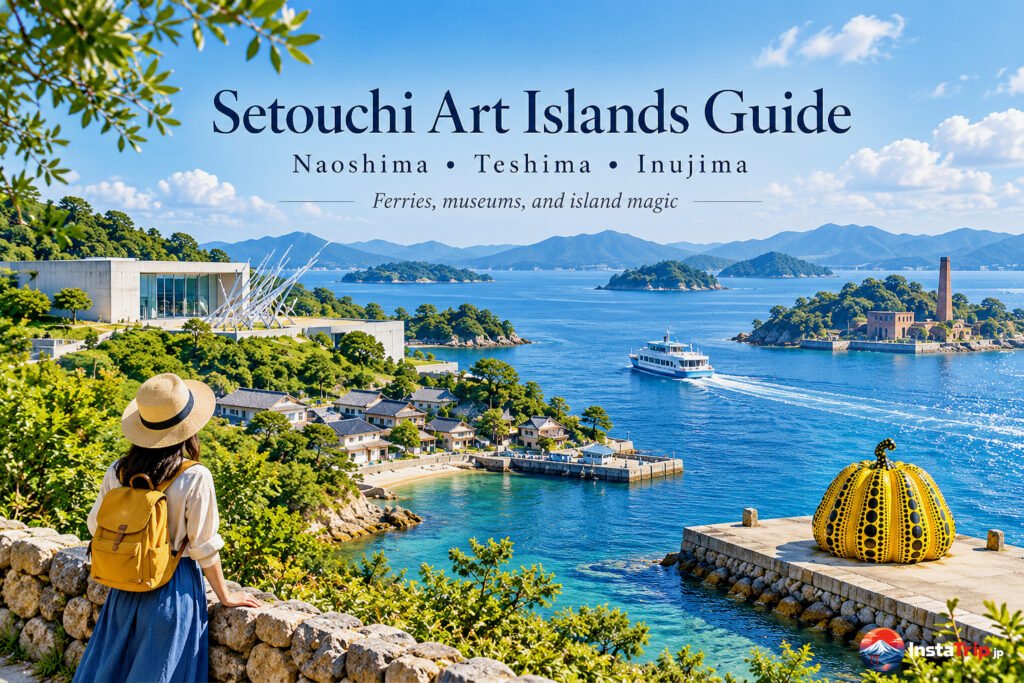
The yellow pumpkin appears at the end of Naoshima’s pier like a cheerful signal that you have arrived somewhere extraordinary. This Setouchi art islands guide is for travelers who want to experience more than a museum itinerary: a captivating inland-sea journey where contemporary art, weathered fishing villages, bold architecture, and the changing light of the water become part of the same work.
Spread across the Seto Inland Sea between Honshu, Shikoku, and smaller islands, this celebrated art destination is shaped by an unusual idea. Art is not contained behind city walls. It sits beside quiet lanes, inside former homes, within a restored refinery, and on shores where ferries pass through a magnificent expanse of blue. The best visit balances planning with room to pause.
Why the Setouchi Art Islands Feel So Distinctive
The art islands are closely associated with Benesse Art Site Naoshima, a long-running cultural project that has helped transform several islands into internationally admired places for art and architecture. Its vision is rooted in the coexistence of nature, people, and art. That is more than a slogan when you are standing before a sculpture framed by the sea, then walking past vegetable gardens and traditional wooden houses a few minutes later.

The islands also invite a more reflective pace than Japan’s major cities. Ferries set the rhythm. A missed boat can alter the day, but that is not always a loss. Waiting at a harbor, watching the tide or sharing a bench with local passengers is part of the atmosphere. For many visitors, Setouchi becomes a memorable contrast to the dynamic energy of Tokyo, Osaka, or Kyoto.
Naoshima, Teshima, and Inujima are the essential trio for a first visit. Each has its own character, and trying to see all three in a rushed day reduces the experience to transit. Give the islands the time their art asks for.
Setouchi Art Islands Guide: Start With Naoshima
Naoshima is the best-known island and the easiest place to begin. It has the broadest concentration of museums, installations, accommodations, cafés, and ferry connections. Most travelers arrive from Uno Port in Okayama Prefecture or from Takamatsu on Shikoku, then choose between the island’s two principal ports, Miyanoura and Honmura.
Chichu Art Museum and the power of natural light
Built largely underground by architect Tadao Ando, Chichu Art Museum is one of Japan’s most remarkable encounters between architecture and art. Concrete corridors lead visitors toward carefully controlled views of sky, shadow, and landscape. The building does not feel buried so much as carved from the island itself.

Its permanent collection includes works by Claude Monet, James Turrell, and Walter De Maria. Monet’s Water Lilies are especially moving here, viewed in a room designed to change with daylight. The experience is quiet, almost ceremonial, and very different from seeing the same artist in a conventional gallery.
Reservations and timed entry are often required, particularly in busy seasons. Book this museum first, then shape the rest of your Naoshima day around that time slot. It is also wise to allow more time than expected. Chichu rewards unhurried looking.
Benesse House, outdoor art, and coastal walks
Benesse House combines a museum, hotel, and open-air art environment along Naoshima’s southern coast. Even travelers not staying there can experience its museum areas and many of the surrounding works. Sculptures by artists including Yayoi Kusama, Niki de Saint Phalle, and others appear against pines, grass, and the luminous Seto Inland Sea.
The famous yellow pumpkin by Kusama is near Miyanoura, while the red pumpkin welcomes arrivals at the port. They are joyful photo stops, but they also set the tone for an island where art is allowed to be playful, public, and part of daily movement.
Walking or cycling between sites can be wonderful in mild weather. Still, Naoshima’s hills and distances are real, and summer heat can be intense. The local bus is a practical choice if you want to preserve energy for the museums. Renting an electric bicycle can work well for confident riders who are comfortable with narrow roads and shifting weather.
Honmura’s Art House Project
On Naoshima’s eastern side, Honmura offers a gentler, village-centered experience. The Art House Project places contemporary installations inside renovated and preserved structures in an active residential neighborhood. Visitors move through lanes, pass shrines and gardens, and enter spaces that reveal art through darkness, sound, water, color, and memory.
This is where the island’s cultural texture becomes particularly vivid. Be mindful that these are lived-in communities, not open-air sets. Keep voices low, follow photography rules, and avoid blocking narrow streets or private entrances. Respectful travel helps preserve the atmosphere that makes the project possible.
Teshima: Art Shaped by Water, Wind, and Silence
Teshima is greener, more rural, and often more emotionally spacious than Naoshima. Its rolling hills, rice fields, and coastal roads make the journey feel like an excursion through the Seto Inland Sea’s agricultural landscape. Ferry connections are less frequent, so check the day’s schedule carefully before leaving Naoshima or Uno.
The island’s centerpiece is Teshima Art Museum, created by architect Ryue Nishizawa and artist Rei Naito. From outside, its low white form resembles a smooth drop resting in the hillside. Inside, openings reveal sky and trees while water slowly emerges through tiny points in the floor, gathering and moving in delicate patterns.
The museum asks for stillness. There is little to read and nothing to rush toward. Sit, notice the breeze, and let your eyes adjust to the changing light. On a rainy or windy day, the building can feel even more alive, because the weather becomes part of the work.
Teshima also holds smaller, deeply personal projects, including Christian Boltanski’s Les Archives du Cœur, an archive of recorded heartbeats. The work is a moving reminder that contemporary art here is not only about spectacle. It can be intimate, fleeting, and connected to the lives of people far beyond the island.
A bicycle is useful on Teshima, though the terrain includes serious hills. E-bikes are strongly preferable for most visitors. If you are not cycling, plan a narrower route around one or two major sites and build in enough time for buses and ferry departures.
Inujima: A Former Industrial Island Reimagined
Tiny Inujima feels like a secret after the scale of Naoshima. Once associated with copper refining, the island now uses that industrial history as part of its artistic identity. The Inujima Seirensho Art Museum incorporates the remains of a former refinery into an architectural experience shaped by brick, stone, vegetation, and natural ventilation.
The museum’s use of the site is significant. Rather than erase an abandoned industrial landscape, it allows visitors to encounter its material memory. Artworks and architecture create a dialogue with the island’s past, including its period of industrial expansion and later decline.
Inujima’s village-based art projects extend that conversation into small houses and gardens. It is a compact island, but do not mistake compact for quick. The pleasure lies in wandering slowly, noticing rusted walls, sea grass, narrow paths, and the quiet distance between one installation and the next.
Because services and ferry options can be limited, Inujima is best approached with a clear plan. It can be a rewarding day trip from Okayama or a carefully timed addition to a longer island itinerary.
How Many Days Do You Need?
Two full days is the minimum for a satisfying first trip: one for Naoshima and one for Teshima, with Inujima saved for another journey. Three days gives you the freedom to include all three islands without turning every ferry into a deadline. Four days is ideal for travelers who want time for lesser-known works, coastal walks, and an overnight stay on Naoshima.
Where you sleep changes the experience. Staying on Naoshima offers early and late moments when day visitors have gone, while Uno and Takamatsu provide more dining choices and easier transport connections. Neither option is universally better. Choose Naoshima for immersion, or a mainland port city for convenience and flexibility.
Practical Details That Make a Better Visit
The Setouchi Triennale, held periodically across the region, brings new installations and an especially vibrant festival atmosphere. It is an exciting time to visit, but also the time when reservations, accommodations, and ferries are most competitive. Outside festival periods, the islands can feel quieter, though museums may have seasonal closures or reduced hours.
Before departure, confirm ferry timetables, museum opening dates, reservation rules, and luggage policies. Many sites do not allow large bags inside. Cash remains useful for smaller purchases and local transport, although card acceptance is increasingly common.
Spring and autumn are usually the most comfortable seasons for walking and cycling. Summer delivers brilliant sea views and a lively island mood, but humidity and heat demand a slower schedule, water, sunscreen, and frequent rest. Winter offers calm, clear days and fewer crowds, with the trade-off of shorter daylight and more limited operations.
Most of all, leave space in your itinerary. The Setouchi islands are not a checklist of famous pumpkins and museum names. They are a rare chance to see how contemporary creativity can deepen attention to place. Board the ferry with a plan, but let the sea, the light, and the quiet lanes alter it a little.
![[商品価格に関しましては、リンクが作成された時点と現時点で情報が変更されている場合がございます。]](https://hbb.afl.rakuten.co.jp/hgb/57997c26.c5e6aec1.57997c27.48305bcf/?me_id=1396216&item_id=10000045&pc=https%3A%2F%2Fthumbnail.image.rakuten.co.jp%2F%400_mall%2Ff373648-naoshima%2Fcabinet%2F0146_1685487_01.jpg%3F_ex%3D128x128&s=128x128&t=picttext "[商品価格に関しましては、リンクが作成された時点と現時点で情報が変更されている場合がございます。]")