

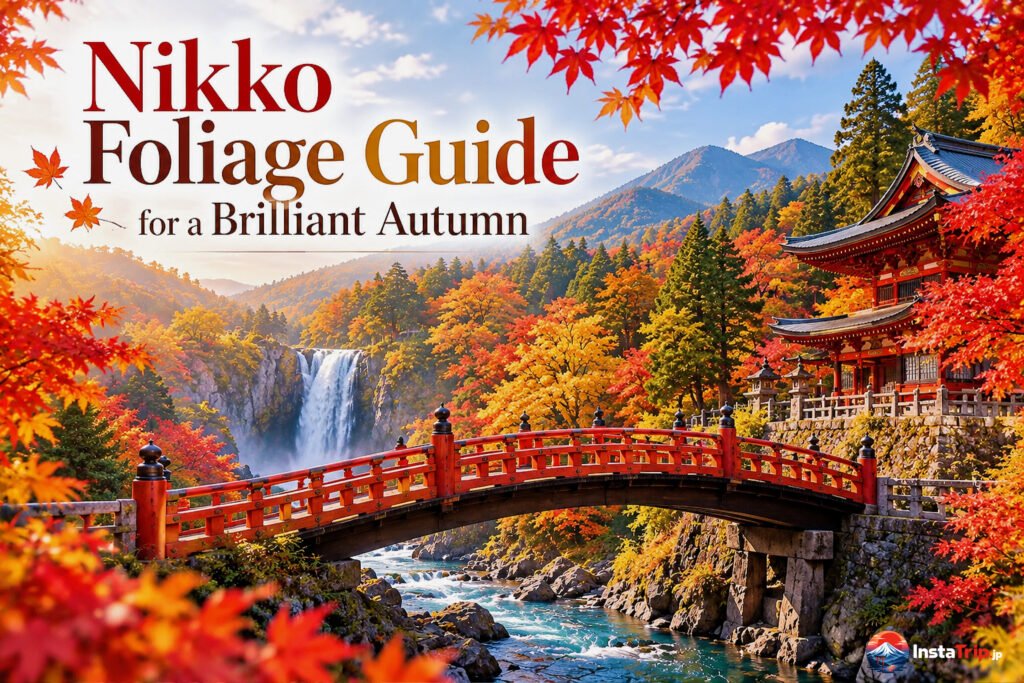
Autumn in Nikko (日光市) does not arrive all at once. It travels down from the cool volcanic highlands of Oku-Nikko, setting forests ablaze around Lake Yunoko before reaching Lake Chuzenji, the famous Irohazaka Winding Road, and the cedar-shadowed shrines below. This Nikko foliage guide follows that descent, helping you experience one of Japan’s most magnificent autumn landscapes with a little more timing, context, and calm.
Nikko is especially captivating because its fall color is never just scenery. Vermilion bridges, Buddhist temple roofs, Shinto shrines, mountain lakes, and waterfalls share the same frame. The season gives visitors a vivid introduction to a place long regarded as sacred, where nature and spiritual heritage have shaped each other for centuries.
When to See Autumn Color in Nikko
Nikko’s foliage season generally runs from late September through mid-November, but the best week depends entirely on elevation. Oku-Nikko sits high in the mountains, while the UNESCO-listed shrine and temple area is much lower. That difference gives Nikko an unusually long autumn window and makes it possible to plan around the colors rather than chase a single peak day.

At the highest elevations around Yumoto Onsen, Lake Yunoko, and Senjogahara Marshland, leaves can begin turning in late September. Early to mid-October is often the most rewarding period for the Oku-Nikko area, including Ryuzu Falls and the northern shores of Lake Chuzenji. Around Kegon Falls, Lake Chuzenji, and Irohazaka, color commonly reaches its most dramatic stage from mid-October to early November.
The lower town, including the sacred precincts of Toshogu Shrine, Rinnoji Temple, and Futarasan Shrine, usually looks its best from early to mid-November. This is a beautiful choice for travelers who prefer heritage sites, atmospheric stone paths, and maple leaves glowing against dark cedar forest.
Exact timing changes with temperature, wind, and rainfall. A warm autumn can delay peak color, while a strong storm can shorten it. If your dates are flexible, choose a week that lets you move between higher and lower elevations. Nikko rewards travelers who treat the forecast as part of the adventure.

A Nikko Foliage Guide by Elevation
Oku-Nikko: the season begins in the highlands
For early autumn color, travel beyond Nikko’s central temples to Oku-Nikko, the elevated landscape around Lake Chuzenji. The air is noticeably cooler here, the vistas broader, and the mood wonderfully open after the dense forests around the shrine district.
Lake Yunoko offers a gentle start. Its calm water catches reflections of gold, rust, and deep green, while the nearby Yumoto Onsen area brings a quieter, restorative rhythm. From there, Senjogahara Marshland presents a very different kind of autumn beauty: a wide wetland framed by mountains, grasses fading to amber, and walking paths that make the landscape feel close rather than distant.
This area suits hikers and photographers, but it also appeals to travelers who want Nikko beyond its famous landmarks. The highland scenery feels spacious and elemental, especially in the morning when mist can hover near the water.
Ryuzu Falls: a river of color
Ryuzu Falls is among Nikko’s signature autumn scenes. Water rushes around dark rocks before splitting near the base into two streams, a shape said to resemble a dragon’s head. During peak season, maples and other decididuous trees brighten the gorge in shades of red and yellow, creating a scene that feels almost theatrical.
The falls are easy to appreciate from the viewing area, making them a strong stop for a day trip. Yet popularity comes with a trade-off: buses and roads can be crowded in peak foliage weeks. Arriving early in the morning gives you softer light, more room to pause, and a better chance to hear the water over the surrounding bustle.
Lake Chuzenji and Kegon Falls: Nikko at its most dramatic
Lake Chuzenji is the visual heart of autumn in Nikko. Formed by volcanic activity beneath Mount Nantai, the lake is ringed by forested slopes that intensify in color as October progresses. On clear days, the mountain rises above the water with a presence that explains why this landscape has inspired devotion, art, and seasonal travel for generations.
A walk along the lakefront can be as memorable as any major viewpoint. The color shifts with the weather: brilliant under direct sun, subdued and painterly beneath clouds, and almost coppery toward late afternoon. If time allows, a sightseeing boat offers a fresh perspective on the shoreline and surrounding peaks.
Nearby, Kegon Falls plunges nearly 320 feet from Lake Chuzenji into a rocky gorge. It is powerful in every season, but autumn heightens the contrast between white water, dark cliff faces, and glowing leaves. The upper viewing area provides an immediate view, while the lower observation deck offers a more immersive angle. Expect lines at the elevator during busy weekends, particularly when foliage and clear weather coincide.
Irohazaka: the descent through autumn
The Irohazaka Winding Road connects Lake Chuzenji with lower Nikko through a spectacular sequence of tight mountain curves. Its name refers to the old Japanese syllabary, and the road is famously associated with 48 bends. In fall, it becomes a moving panorama of forest color.
This is one of the most celebrated drives in the region, but it is not always the fastest route. Weekend traffic can be substantial, and the uphill journey from central Nikko may take far longer than expected. Travelers who value a relaxed itinerary should use early buses, visit on a weekday, or stay overnight near Lake Chuzenji or Yumoto rather than trying to see every major sight in one rushed day.
The road itself is part of the experience, but do not let it replace time on foot. A few unhurried moments beside the lake or at a waterfall will often stay with you longer than another photo taken through a bus window.
Sacred Color in Central Nikko
By November, the foliage arrives around Nikko’s celebrated shrine and temple complex. This is where autumn feels most connected to the area’s cultural identity. Nikko Toshogu Shrine, created as the mausoleum of Tokugawa Ieyasu, is known for its richly detailed architecture, but its setting matters just as much. Ancient cedar trees stand beside carved gates and lantern-lined approaches, while maples introduce flashes of crimson and gold.
The contrast is captivating: elaborate surfaces, mossy stone, deep forest shade, and the delicate impermanence of fallen leaves. Autumn is a fitting season for this encounter with Nikko’s history. Japanese aesthetics have long found meaning in seasonal change, and the fading brilliance of foliage can make even a familiar path feel newly alive.
Do not overlook Rinnoji Temple and Futarasan Shrine. Their grounds offer a more contemplative pace, especially earlier or later in the day. Shinkyo Bridge, painted a striking vermilion over the Daiya River, is another essential autumn image. It is often busy, but the view remains extraordinary when red leaves gather on the surrounding hillsides.
How to Plan a Better Nikko Autumn Day
Nikko can be reached as a day trip from Tokyo, yet peak foliage season makes an overnight stay worth considering. A day trip works best when you choose one focus: either the highlands around Lake Chuzenji and Ryuzu Falls, or the lower shrine and temple district. Combining both is possible, but traffic, bus queues, and short daylight hours can turn an ambitious plan into a hurried one.
For a fuller experience, arrive in central Nikko early, then travel upward before the roads become congested. If you are staying overnight, reverse the rhythm: enjoy Lake Chuzenji or Oku-Nikko in the quieter morning, then return to the shrine district later when day-trippers begin leaving.
Dress for changeable mountain conditions. Oku-Nikko can feel much colder than Tokyo, particularly near sunrise and after sunset. Comfortable walking shoes matter more than fashionable footwear, since the finest views often require uneven paths, lakeside walks, or a short climb to a viewpoint.
Respect also shapes a good visit. Nikko’s shrines and temples are active sacred spaces, not autumn backdrops. Keep voices low in worship areas, follow photography guidance, and allow time to notice the details beyond the leaves: incense in the air, the sound of water, carved guardians, and towering cedars that have watched seasons change for centuries.
When Nikko’s maples finally scatter across stone steps and forest paths, the destination reveals its most memorable lesson: autumn beauty is not a single viewpoint or a perfect photograph. It is the changing journey from mountain mist to sacred cedar grove, experienced at a pace slow enough to let the season speak.
|
![[商品価格に関しましては、リンクが作成された時点と現時点で情報が変更されている場合がございます。]](https://hbb.afl.rakuten.co.jp/hgb/574e3685.cabbaef8.574e3686.a399bfc8/?me_id=1363741&item_id=10000243&pc=https%3A%2F%2Fthumbnail.image.rakuten.co.jp%2F%400_mall%2Ff094072-nasu%2Fcabinet%2Fnasuonsen%2F11675-30030417-01a.jpg%3F_ex%3D128x128&s=128x128&t=picttext "[商品価格に関しましては、リンクが作成された時点と現時点で情報が変更されている場合がございます。]")