
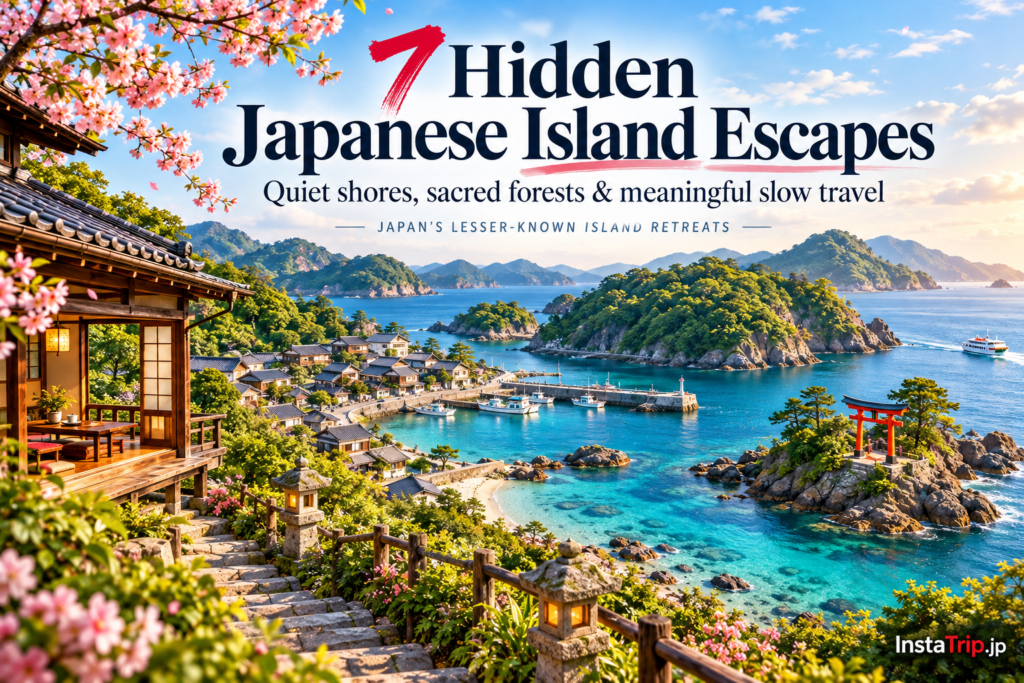
The ferry pulls away from the mainland, the city softens into a distant line, and Japan begins to feel beautifully different. Hidden Japanese island escapes are not simply about finding an empty beach. They reveal another rhythm of the country: fishing harbors waking before sunrise, forest paths leading to shrines, volcanic coastlines, and communities whose traditions have been shaped by the sea.
Japan has thousands of islands, but the most rewarding ones ask travelers to slow down. Some require a long ferry ride or a small regional flight. Others are surprisingly close to Tokyo, yet feel worlds away once the last commuter boat has gone. The trade-off is real: fewer English signs, limited dining hours, weather-dependent transport, and less choice in accommodations. In return, there is time and space to experience Japan with unusual clarity.
Why Japan’s Islands Feel So Distinctive
An island in Japan is rarely just a scenic detour. Its geography often explains its food, architecture, festivals, dialect, and spiritual landscape. On one island, black volcanic sand frames the shore; on another, centuries of trade have left church spires, warehouses, and recipes that do not resemble mainland Japan. In the south, coral seas meet subtropical forests. Far north, wildflowers spread across windswept hills above the Sea of Japan.
This is why a thoughtful island trip works best with a sense of place, not a checklist. Leave room for a local bus that arrives only a few times a day, a meal built around the morning catch, or an unplanned stop at a small temple. The quieter details are often the point.

7 Hidden Japanese Island Escapes Worth the Journey
Sado Island (佐渡島), Niigata Prefecture
Sado, floating off the coast of Niigata, feels expansive enough to reward several days. Once known for its gold mine and as a place of exile for prominent historical figures, the island carries a powerful mix of dramatic history and rural calm. Rice fields, cedar forests, terraced coastlines, and old merchant streets create a landscape that changes character as you travel around it.
The island is also deeply connected to taiko drumming through the internationally known Kodo ensemble, whose performances draw on the physical energy and communal spirit of traditional percussion. Near Ogi, the tarai bune – round tub boats once used by local women to harvest shellfish and seaweed in narrow coves – offer a memorable image of Sado’s maritime life.
A rental car makes Sado much easier to explore, especially for the remote northern coast. Without one, focus on a smaller area and check bus schedules carefully. Spring through autumn is generally the most comfortable time to visit, while winter brings a more severe, atmospheric side of the island.
Shikinejima (式根島), Tokyo
Shikinejima is part of Tokyo, but it has none of Tokyo’s rush. Reached by ferry from Takeshiba Pier or via neighboring islands, this small island in the Izu archipelago is shaped by clear water, pale coves, and natural seaside hot springs. Its scale is one of its greatest pleasures: much of Shikinejima can be explored by bicycle, on foot, or by local bus.

The island’s hot springs are especially captivating because they sit right beside the ocean. Their temperature changes with tides and conditions, so visitors should follow local guidance, use designated areas, and bring appropriate swimwear where required. This is not a polished resort experience. It is a communal natural setting, best enjoyed with quiet consideration for others.
Shikinejima suits travelers seeking a short island reset from Tokyo. Summer brings swimming and a livelier mood, but late spring and early fall can offer gentler temperatures and fewer visitors.
Hahajima (母島), Ogasawara Islands (小笠原諸島)
For a true sense of distance, travel farther south to Hahajima in the Ogasawara Islands. The journey itself is part of the experience: the ferry from Tokyo takes roughly 24 hours to reach Chichijima, followed by a connecting boat to Hahajima. The reward is a subtropical world of steep green ridges, brilliant Pacific views, and an extraordinary natural environment.
The Ogasawara Islands are recognized for their distinctive ecosystems, including plant and animal species found nowhere else. That rarity makes responsible travel essential. Stay on marked trails, avoid disturbing wildlife, and follow local rules around snorkeling, hiking, and waste. The island’s beauty is not separate from its fragility.
Hahajima is for travelers who value immersion over convenience. Accommodation is limited, supplies can be modest, and ferry schedules shape every plan. Yet its star-filled nights and vast ocean horizons offer a magnificent feeling of being at the edge of Japan.
Amami Oshima (奄美大島), Kagoshima Prefecture
Amami Oshima lies between Kyushu and Okinawa, with a cultural identity and natural landscape all its own. Dense forests cover much of the island, while mangroves, coral-fringed shores, and small villages create an atmosphere that is lush, warm, and quietly dynamic. The island is also associated with shima-uta, a local folk-song tradition often accompanied by the sanshin, a three-stringed instrument with a distinctive, resonant sound.
One of Amami’s most fascinating crafts is oshima tsumugi, a finely woven silk textile traditionally dyed with mud and local plant materials. Seeing the process adds another dimension to the island: its celebrated natural colors are not only found in forests and coastlines, but also carried into human craft.
A car is helpful for reaching beaches, forest areas, and villages beyond the airport corridor. Summer offers vivid sea conditions but also greater heat and the possibility of typhoons. Spring and late autumn can be especially rewarding for travelers who prefer hiking, culture, and quieter roads.
Fukue Island (福江島), Goto Islands (五島列島), Nagasaki Prefecture
Fukue is the largest island in Nagasaki’s Goto archipelago, where rugged coastlines and Christian heritage form a moving cultural landscape. Christianity was introduced to Japan in the 16th century, later prohibited during the Edo period, and preserved in secret by communities now known as Hidden Christians. Their history is one of faith, adaptation, and endurance, and it deserves a respectful, unhurried approach.
Across the Goto Islands, churches stand within village settings rather than apart from everyday life. Some are accessible to visitors, but they remain active places of worship. Dress modestly, keep voices low, and respect photography rules. The atmosphere is often more meaningful when visitors remember that these buildings are not merely historic sites.
Fukue also offers striking coastal drives, local udon, and broad beaches that feel far from Japan’s better-known resort routes. Flights and ferries connect the island with Nagasaki and Fukuoka, making it more accessible than its tranquil character suggests.
Rebun Island (礼文島), Hokkaido (北海道)
Off Hokkaido’s far northwestern coast, Rebun rises from the sea with grassy slopes, cliffs, and paths looking toward distant Rishiri Island. It is a short summer season destination, famous for alpine flowers that bloom at unusually low elevations because of the cool climate. Walking here feels open and elemental, with wind, ocean, and sky never far from view.
Rebun’s appeal is not tropical escape but northern grandeur. Hiking trails range from gentle walks to longer routes, and conditions can change quickly. Sturdy footwear, layers, and a flexible plan are more useful than a packed itinerary. The island is best from late spring into early autumn, when trails and ferries are most reliable.
Stay long enough to try local seafood, particularly sea urchin when in season. It is a direct expression of the surrounding waters, prized for its richness and freshness.
Aoshima (青島), Ehime Prefecture
Aoshima is among the smallest and most unusual island experiences in Japan. Often called “Cat Island” because of its large feline population, it has become widely photographed, yet it remains a shrinking fishing community with limited infrastructure. There are no convenience stores, no hotels, and very limited services.
That makes Aoshima less of a casual attraction than a place requiring careful judgment. Ferry capacity is restricted, schedules can change, and visitors should never feed animals outside local guidance or treat residents’ home as a photo set. Bring back all trash, avoid blocking paths, and recognize that the island’s story is also about depopulation and aging rural communities.
For travelers prepared for those realities, Aoshima can be a gentle, thought-provoking stop rather than a novelty. Its quiet lanes, weathered houses, and harbor views offer a glimpse of a Japan that rarely appears in bright city itineraries.
Plan Island Time, Not Just Island Stops
The best hidden Japanese island escapes are usually ruined by overplanning. Build in a weather buffer, particularly for ferry routes, and reserve lodging early when an island has only a handful of guesthouses. Carry cash, since smaller communities may have limited card acceptance, and confirm transport schedules shortly before departure.
Most of all, arrive with patience. Learn a few Japanese greetings, support local restaurants and shops, and treat shrines, churches, beaches, and village lanes as living spaces rather than backdrops. On Japan’s islands, the journey becomes more memorable when you let the tide, the weather, and the local pace decide part of the day.
Choose an Island That Fits Your Travel Time
| Island | Best fit in this guide | Planning priority |
|---|---|---|
| Sado | History, coastline and rural culture | Choose a manageable area and arrange local transport. |
| Shikinejima | A compact Izu island visit | Check sea conditions and ferry schedules. |
| Hahajima | A remote nature-focused stay | Build the entire trip around both ferry legs. |
| Amami Oshima | Forest, craft and subtropical coasts | Choose a base and plan transport beyond it. |
| Fukue | Coastal scenery and Goto heritage | Respect church access arrangements. |
| Rebun | Northern walking and flower scenery | Check the season, weather and return ferry. |
| Aoshima, Ehime | A limited-service visit to a residential island | Confirm current access before committing to the trip. |
Confirm the Boat Before the Hotel or Excursion
Use the Sado Kisen website for Sado services and Tokai Kisen for Izu-island notices. A photograph of a boat, or an archived timetable, is not confirmation of a sailing on your date. Allow a return buffer before an international flight.
For Aoshima, distinguish Ehime’s island from the better-known Aoshima in Miyazaki. Check Ozu City’s Aoshima ferry notices before planning access. The city announced a maintenance suspension for October 1–13, 2026; the end of a scheduled suspension does not itself confirm today’s service. Check the latest notice and weather conditions.
Compare these choices with our Okinawa island-planning guide and Naoshima visitor guide if you want a different island experience.
Watch: Sado Island’s Coastal Scenery in 4K
This AQUA Geo Graphic landscape film previews Sado’s coast and heritage scenery. It illustrates one of the seven islands in this guide, rather than a single route connecting all of them.
Japanese Island Escapes FAQ
Can I combine all seven in one short trip?
These are separate alternatives across Japan. Choose one or two that fit your wider itinerary instead of treating the list as a continuous island-hopping route.
Which one suits a short trip from Tokyo?
Shikinejima is the compact option described here, but ferry timing and weather determine how much time is practical. Hahajima requires a much larger commitment.
Should I assume shops accept cards?
No. Carry enough cash for your planned stay and ask your accommodation about meals, supplies and local transport before arrival.
Is Aoshima a staffed cat attraction?
No. It is a residential island with limited facilities. Respect residents and animal-care guidance, and confirm transport before visiting.
Useful travel items (paid links): If needed, browse a compact daypack or a light rain layer. Use suitable items you already own.
Japanese Island Map and Individual Locations
These seven islands are spread across Japan. Use the overview for orientation and open each island separately for a closer view. The map does not indicate ferry routes or current access.