
A small towel placed beside a steaming bowl of ramen, an umbrella offered before a sudden Tokyo shower, a ryokan host who has already anticipated your dietary needs: these moments point to a powerful Japanese idea. What is omotenashi Japan? It is hospitality shaped by attentiveness, care, timing, and a sincere desire to make another person feel at ease.
For travelers, omotenashi can feel almost magical because it often appears in details that are easy to miss. Yet it is not a script, a promise that every interaction will be perfect, or a mysterious ability to read every visitor’s mind. It is a cultural ideal expressed differently in a Kyoto tea room, a neighborhood bakery, a grand Tokyo hotel, and an ordinary train station.
What Is Omotenashi in Japan?
Omotenashi is commonly translated as Japanese hospitality, but the English word only captures part of its meaning. Hospitality can suggest friendly service or generous hosting. Omotenashi goes further by emphasizing the thought behind an act: noticing what may be needed, preparing with care, and offering help without making the recipient feel indebted.

The word is often associated with the idea of serving without a hidden agenda or a divide between one’s public face and private intentions. Another interpretation connects it to motenashi, meaning to receive or entertain guests through thoughtful preparation. Language scholars and cultural writers discuss these nuances in different ways, so it is best not to reduce the term to one neat origin story. What matters in lived experience is the spirit of considerate welcome.
This spirit is not limited to luxury. A beautifully wrapped purchase in Ginza, a station attendant patiently guiding a lost visitor, or a café server placing your drink exactly where it is easiest to reach can all reflect omotenashi. The gesture may be quiet, almost invisible. That restraint is part of its appeal.
The Art of Anticipating Without Intruding
At its finest, omotenashi balances attentiveness with respect for personal space. A host may prepare extensively before a guest arrives, then remain discreet once the experience begins. The goal is not to display effort for applause. It is to create a setting where the guest can relax.
Think of arriving at a traditional ryokan in Hakone or Kinosaki Onsen. Shoes are set aside at the entrance, luggage is handled carefully, tea may appear after check-in, and the room is arranged with a clarity that immediately slows the pace of the day. Later, futons are prepared while guests are at dinner. These are not random formalities. They are a sequence designed to make the stay feel calm, ordered, and welcoming.
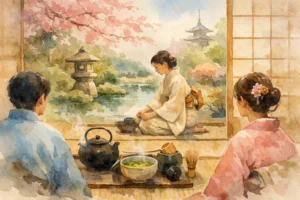
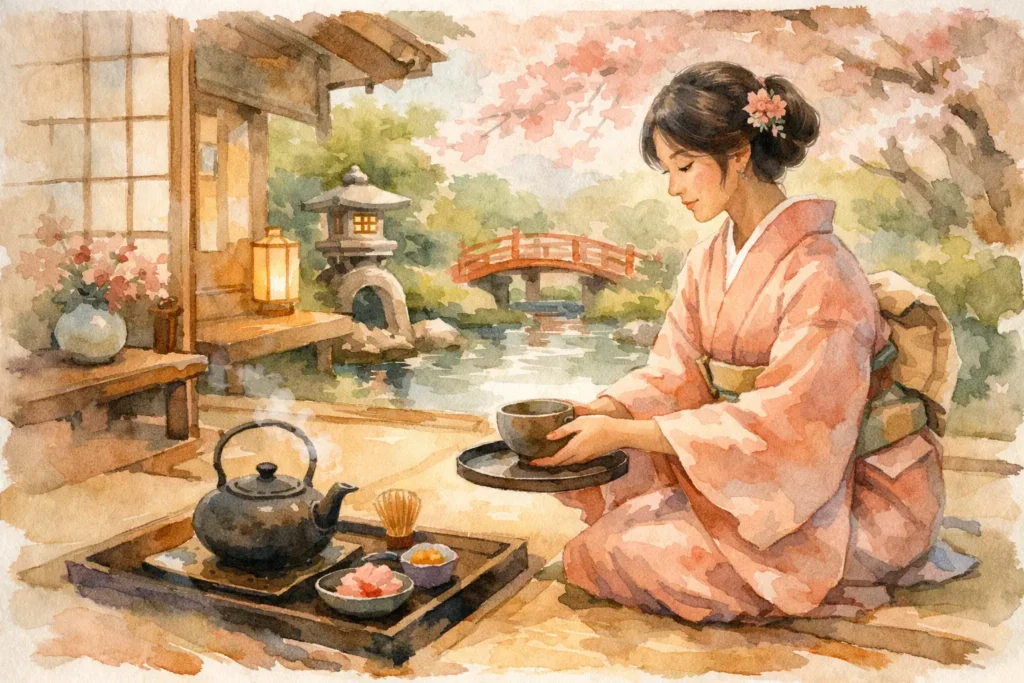
The same principle can be found in the Japanese tea ceremony. The host considers the season, the utensils, the flowers, the hanging scroll, the sweets, and the pace of the gathering. Every choice helps create a fleeting shared moment. The guest is not simply receiving tea. They are being invited into an atmosphere shaped by attention.
That does not mean every encounter in Japan is formal. In fact, much of omotenashi is practical. A restaurant may bring a basket to protect your bag from the floor. A shop employee may walk you to the door rather than point from behind a counter. At a department store, purchases can be wrapped with extraordinary precision because presentation is treated as part of the exchange, not an afterthought.
Why Omotenashi Feels Different to Travelers
Many visitors first notice omotenashi through Japan’s remarkable standards of public service. Train platforms are organized, stores are clean, and staff often greet customers with warmth and professional care. These experiences are memorable, especially in vibrant districts where thousands of people move through the same spaces each day, from Shinjuku and Ueno to Osaka’s bustling Namba.
But it is worth resisting the idea that omotenashi means constant cheerful service or total efficiency. Japan is a large, diverse country, and people vary as much as they do anywhere. A busy café may have limited English support. A small family-run restaurant may be wonderfully kind but unable to accommodate every request. A service interaction can be polite and still feel reserved.
Omotenashi is also shaped by context. In a high-end hotel, it may involve personalized welcome notes and careful coordination. At a humble soba shop, it may be the owner remembering a regular customer’s usual order. In a temple or shrine setting, care may take the form of clear boundaries that protect a sacred space. Respect is not always expressed by giving visitors unrestricted access.
This is one reason omotenashi is more meaningful than the cliché of “Japanese service.” It is not merely about pleasing a customer. It can involve preserving harmony, maintaining dignity, and considering the needs of everyone sharing a place.
Omotenashi in Everyday Japan
You do not need to book a luxury experience to encounter this cultural value. Look for it in the ordinary choreography of daily life.
In a convenience store, a clerk may separate hot and cold items in your bag. On a rainy day, a store may offer plastic covers for wet umbrellas. At a railway station, announcements, signage, tactile paving, and platform markings help move enormous crowds with less confusion. These systems are not perfect, but they reveal how consideration can be built into routine environments.
Food culture offers especially vivid examples. At a sushi counter, the chef may adjust the pace according to your eating speed. In an izakaya, staff may replace a small plate or refill water before you ask. At a carefully run kissaten, a simple cup of coffee can arrive with a folded napkin, a small sweet, and the kind of composed presentation that turns a short break into a ritual.
Seasonality adds another layer. Japan’s changing seasons influence menus, interiors, gifts, and greetings. A spring dessert may feature cherry blossoms, while autumn tableware may echo the colors of maple leaves. This is not decoration alone. It acknowledges the shared moment in the year, connecting service to place and time.
How to Receive Omotenashi Respectfully
The best response to omotenashi is not to expect it on demand. Receive it with appreciation and meet it with basic consideration. A simple arigatou gozaimasu goes a long way, even when communication happens mostly through gestures.
Tipping is a useful example. In the United States, tipping often signals gratitude for service. In Japan, it is generally not expected and can create an awkward moment in ordinary restaurants, taxis, and shops. The price is typically understood to include the service. In certain traditional settings, such as a private guide or ryokan arrangement, practices can vary, but travelers should not assume cash is the best expression of thanks.
Instead, be punctual for reservations, follow house rules, keep shared spaces tidy, and pay attention when staff explain a process. If a restaurant asks you to wait, a bathhouse asks you to wash before entering, or a historic site requests quiet behavior, those requests are part of caring for the experience of others as well.
There is a reciprocal side to omotenashi that visitors can practice anywhere in Japan: avoid blocking narrow sidewalks with luggage, speak softly on trains, and be patient when language differences slow an interaction. Thoughtfulness is not something to consume. It is something you can return.
Beyond Service: A Way of Creating Atmosphere
Omotenashi becomes most captivating when understood as an approach to atmosphere. It lives in the lantern-lit entrance of a Kyoto inn, the precise calm of a Tokyo bar, the immaculate display of a wagashi shop, and the warm welcome of a local museum volunteer eager to share a town’s story.
It also carries a trade-off. The care behind these experiences can involve demanding standards of preparation and labor, especially in hospitality work. Visitors should appreciate the skill involved rather than treating it as effortless or automatic. The quietest gestures often require the most planning.
As you travel through Japan, look beyond grand acts of service. Notice the chair turned toward the view, the seasonal flower in a lobby, the extra moment someone takes to help you find the right platform. Omotenashi is not a spectacle. It is the memorable feeling that, for a moment, a place has been prepared with you in mind.