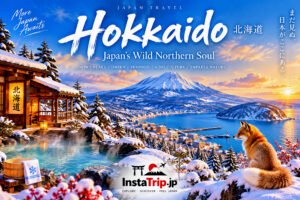

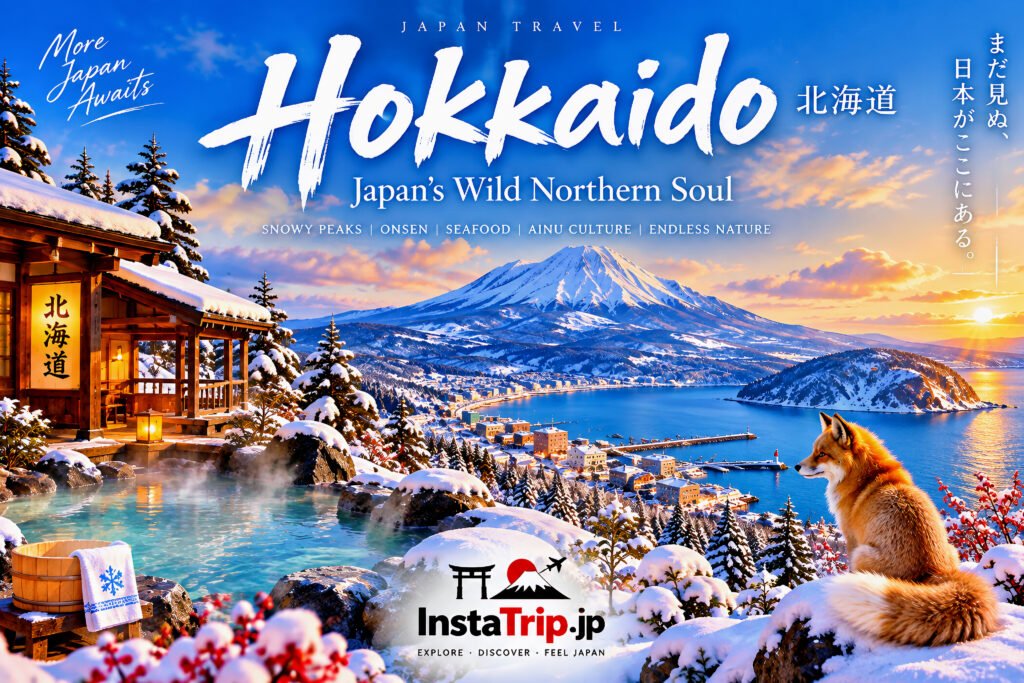
Steam rises from an onsen into crisp mountain air. A bowl of miso ramen warms cold hands after a walk through snow-bright streets. Far beyond the dense energy of Tokyo and Osaka, Hokkaido (北海道) reveals a different scale of Japan: wide horizons, volcanic landscapes, vast farms, fishing ports, and cities shaped by a long northern winter.
Japan’s northernmost main island is not simply a place for skiing or spectacular snow festivals. It is a captivating region where the seasons arrive with unusual force, food carries the clarity of land and sea, and Indigenous Ainu heritage forms an essential part of the island’s cultural landscape. Hokkaido rewards travelers who slow down, look beyond one famous stop, and let nature set the rhythm.
Why Hokkaido (北海道) Feels So Different
Hokkaido’s character begins with its geography. Much of the island is mountainous and forested, with national parks, caldera lakes, volcanic peaks, wetlands, and a coastline reaching toward the Sea of Japan, the Pacific Ocean, and the Sea of Okhotsk. Its low population density gives many journeys a spacious, almost cinematic feeling. Roads run past fields and birch forests; trains pull into towns framed by distant mountains; the sky seems broader than in much of the country.

That openness is also tied to history. Hokkaido was known historically as Ezo and is the homeland of the Ainu, an Indigenous people with their own language, spiritual traditions, artistic practices, and relationship with the natural world. The Japanese state’s development of the island accelerated during the Meiji era, bringing settlement, agriculture, railways, and urban growth, often at great cost to Ainu communities and their cultural autonomy.
For visitors, this history calls for more than a passing reference. The Upopoy National Ainu Museum and Park in Shiraoi offers a meaningful place to learn about Ainu culture through exhibitions, performances, architecture, language, and craft traditions. It is not a historical footnote to Hokkaido’s scenery. It is part of understanding the island itself.
Sapporo: A Dynamic Gateway to the North
Sapporo is where many Hokkaido journeys begin, and its appeal goes well beyond convenience. The city has a clean-lined, spacious layout, a lively dining scene, and a youthful energy that contrasts beautifully with its snowy setting. Odori Park creates a green central axis in warmer months and becomes the stage for the celebrated Sapporo Snow Festival each winter, when monumental ice and snow sculptures transform the city center.

The city’s food culture is immediate and satisfying. Sapporo ramen, often served with a rich miso broth, reflects the practical pleasure of northern cooking. Jingisukan, grilled mutton prepared at the table, is another local favorite, while fresh dairy products reveal the importance of Hokkaido’s pastures. Beer also has a special place in the city’s story, connected to Sapporo’s modern development and enduring social culture.
Sapporo works best as a base for travelers who want urban comfort between day trips, but it should not absorb an entire Hokkaido itinerary unless food, museums, nightlife, or winter events are your priority. The island’s most memorable contrasts often begin once you leave the city.
Volcanic Landscapes, Hot Springs, and Quiet Drama
Southwest of Sapporo, Noboribetsu Onsen introduces one of Hokkaido’s most dramatic landscapes. Its famous Jigokudani, or Hell Valley, is a volcanic basin where sulfurous steam vents and mineral-rich streams create an otherworldly scene. The name is theatrical, but the experience is deeply elemental: the earth is visibly active beneath your feet.
Nearby Lake Toya offers another expression of volcanic beauty. Its calm blue water, central islands, and views of Mount Usu create a gentler atmosphere, especially in summer and early autumn. This is the kind of place where an onsen stay changes the pace of travel. Rather than treating a hot spring as a quick attraction, allow time for an evening bath, a seasonal meal, and the quiet pleasure of waking to a lake or mountain view.
Hokkaido’s hot springs vary widely. Some are polished resort towns, while others feel more remote and rustic. The trade-off is simple: the most accessible areas offer more choices in dining and accommodation, while quieter onsen destinations may require a rental car, careful bus planning, or a willingness to stay overnight.
Furano and Biei: Fields That Change With the Light
Central Hokkaido is often associated with Furano’s lavender fields and Biei’s rolling farmland. In peak summer, rows of purple, red, yellow, and green create scenes that feel almost composed for a painting. Yet reducing the region to lavender season misses its deeper charm. The appeal lies in its changing colors, open roads, small cafés, local produce, and gentle rural pace.
Biei’s Patchwork Road and Panorama Road are especially beautiful when explored without rushing. The landscape is agricultural, not a theme park, and that distinction matters. Respect private land, stay on designated paths, and remember that the fields are working spaces. A photograph becomes more meaningful when it does not disrupt the life that created the view.
A rental car gives the most freedom here, particularly for travelers who want to chase shifting light at sunrise or stop at smaller viewpoints. Public transportation can work for selected destinations, but it is less flexible in rural areas. In winter, however, driving demands confidence with snow and icy roads. For some visitors, a guided trip or rail-based route is the wiser choice.
Eastern Hokkaido: Japan at Its Most Untamed
For a stronger sense of wilderness, travel east. Shiretoko National Park, a UNESCO World Heritage area, is one of Japan’s most magnificent natural regions. Its rugged peninsula, dense forests, cliffs, waterfalls, and rich marine environment support brown bears, deer, foxes, sea birds, and other wildlife. Boat excursions and walking trails offer powerful encounters with the landscape, though conditions change quickly and access is seasonal.
Shiretoko is not a place to treat casually. Follow local guidance, keep a respectful distance from wildlife, and understand that some trails may close because animals are active nearby. The point is not to conquer the landscape, but to experience a place where human movement remains limited by nature.
Further south, Kushiro Marshland offers a quieter but equally fascinating world. Japan’s largest wetland is known for its wide reed beds and red-crowned cranes, especially in winter. Watching these elegant birds against a white landscape can feel almost ceremonial. It is a reminder that Hokkaido’s drama is not always loud. Sometimes it is found in stillness, mist, and the slow movement of a river through marsh grass.
Eat Hokkaido Through Its Seasons
Hokkaido’s food is inseparable from its climate and geography. Cold surrounding waters produce exceptional seafood, from crab and scallops to sea urchin and salmon. Otaru, with its historic canal and glass workshops, is especially popular for sushi and seafood meals, while Hakodate’s morning market offers an energetic introduction to the island’s maritime abundance.
The island is equally celebrated for dairy, potatoes, corn, melons, and wheat. Soft-serve ice cream, butter-rich pastries, cheese, and milk are not merely souvenirs. They reflect an agricultural identity shaped by broad grazing land and cooler temperatures. In autumn, roasted corn and potato dishes feel especially fitting; in winter, ramen, soup curry, and nabe-style meals bring welcome warmth.
Seasonality matters when planning. Winter delivers powder snow, ice festivals, and atmospheric onsen, but daylight is short and travel can be disrupted by weather. Summer is mild compared with much of Japan and ideal for flowers, hiking, and cycling, though popular scenic areas draw crowds. Autumn brings vivid foliage and harvest flavors. Spring arrives later than in Tokyo or Kyoto, with cherry blossoms often appearing from late April into May depending on the area and year.
Let the Island Set Your Itinerary
Hokkaido is large enough that trying to see everything in one trip can turn a magnificent journey into a sequence of transit days. Choose a region and travel with intention: Sapporo, Otaru, and southwest Hokkaido for a first visit; Furano and Biei for rural summer beauty; Niseko or Asahikawa for snow-centered travel; eastern Hokkaido for wildlife and raw natural scale.
The most rewarding Hokkaido experiences often happen between landmarks: a station platform silent under fresh snow, the scent of cedar in an onsen town, a seafood breakfast at dawn, or a distant volcano appearing through the clouds. Give the island room to surprise you, and it will reveal a Japan that feels both profoundly familiar and wonderfully new.
![[商品価格に関しましては、リンクが作成された時点と現時点で情報が変更されている場合がございます。]](https://hbb.afl.rakuten.co.jp/hgb/0489ec49.ec8e1d52.0489ec4a.0edbe10a/?me_id=1213310&item_id=20789540&pc=https%3A%2F%2Fthumbnail.image.rakuten.co.jp%2F%400_mall%2Fbook%2Fcabinet%2F4005%2F9784805314005_1_2.jpg%3F_ex%3D128x128&s=128x128&t=picttext "[商品価格に関しましては、リンクが作成された時点と現時点で情報が変更されている場合がございます。]")