
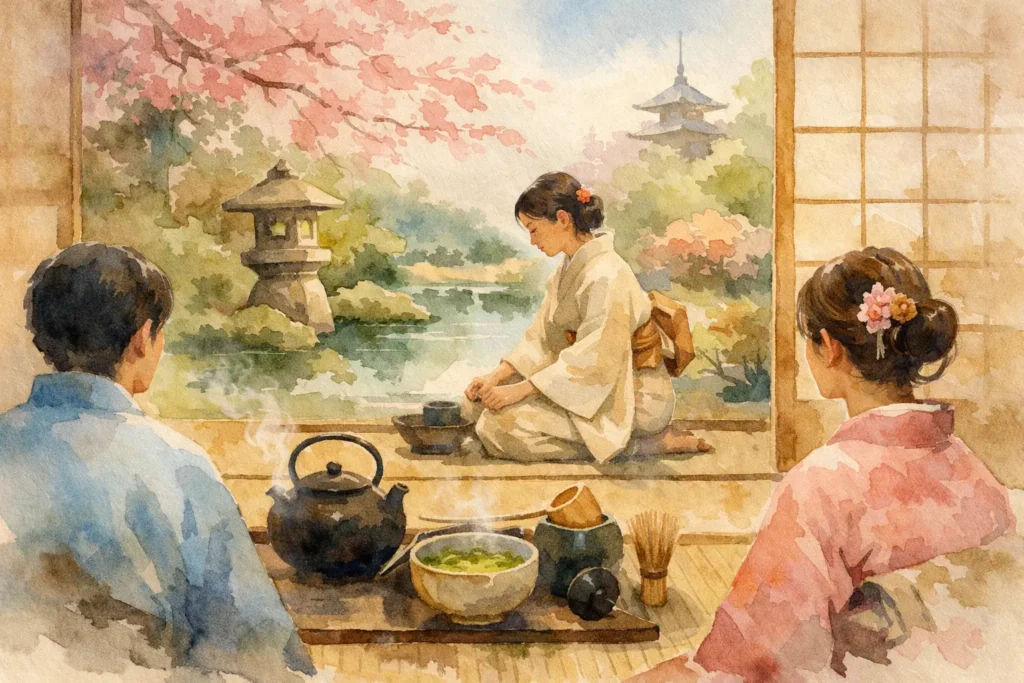
A Japanese tea ceremony can begin with the quiet sound of water heating in an iron kettle, yet its meaning extends far beyond a bowl of matcha. This Japanese tea ceremony guide introduces the experience as it is meant to be felt: a captivating moment of hospitality, attention, and shared presence shaped by centuries of Japanese culture.
Known as chanoyu, chado, or sado, the ceremony is often translated as “the way of tea.” That phrase matters. Tea is not simply served; it is prepared and received through a carefully considered sequence of movements, objects, and gestures. For a visitor, the goal is not to perform every detail perfectly. It is to arrive with patience, observe closely, and accept the host’s welcome with sincerity.
What a Japanese Tea Ceremony Really Celebrates
The ceremony developed from the culture of powdered green tea brought to Japan from China, then took on a distinctly Japanese character through Zen-influenced aesthetics and the work of tea masters, especially Sen no Rikyu in the 16th century. Its enduring spirit is often expressed through the phrase wa-kei-sei-jaku: harmony, respect, purity, and tranquility.

These are not abstract ideas displayed on a wall. They are present in the room itself. A seasonal flower arrangement may be strikingly simple. A hanging scroll may set the emotional tone with a short piece of calligraphy. The tea bowl, or chawan, might be smooth and refined, or deliberately irregular, with a texture that asks to be held rather than merely admired.
This is why a formal tea gathering can feel so vivid. The host has chosen each element for this particular day, season, and group of guests. In spring, the room may suggest fresh growth; in autumn, a bowl’s warm glaze or a single branch can evoke the changing light. The experience reminds guests that beauty is not always grand. Sometimes it is the steam rising from matcha, the glow of a tatami room, and the brief pause before the first sip.
Japanese Tea Ceremony Guide: What to Expect
A ceremony may be a short, accessible introduction lasting around 30 to 45 minutes, or a more formal gathering that unfolds over several hours. In the most elaborate form, guests may enjoy a light meal before sweets and two styles of tea: thick tea, called koicha, and thin tea, called usucha. Many travelers encounter a shorter session centered on usucha, the frothy matcha most people recognize.
Before entering the tea room, guests may pass through a garden path designed to create a transition from daily life. Traditionally, they rinse their hands and mouth at a stone basin, a symbolic act of purification rather than a religious requirement. The mood shifts gradually: busy streets, cameras, schedules, and conversation give way to a more attentive pace.
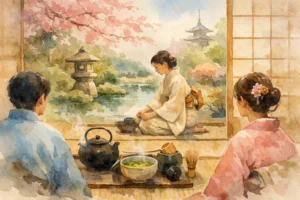
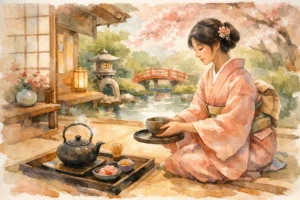
Inside, the host prepares tea with a bamboo scoop, tea caddy, silk cloth, whisk, and kettle. The gestures are practiced, but they are not mechanical. Every movement is intended to be clean, economical, and respectful toward the utensils, the tea, and the people present.
As a guest, you do not need to memorize a choreography. Watch the host or an attendant, and follow their guidance. The most meaningful etiquette is simple: be on time, keep your phone silent and out of sight, speak quietly, and give the occasion your full attention.
How to Receive Matcha With Confidence
When a sweet is offered, enjoy it before the tea. Its gentle sweetness balances matcha’s grassy, pleasantly bitter depth. You may be given a small paper called kaishi and a wooden pick to handle the sweet. If you are unsure how to use them, wait for the host’s cue or discreetly follow the guest beside you.
When the bowl is presented, receive it with both hands and offer a small bow of thanks. In many tea traditions, guests turn the bowl slightly before drinking so they do not drink from its front, the side chosen for display. The exact gesture and direction can differ between schools, which is a useful reminder not to become anxious about rules. Follow the instructions given in that tea room.
Take a few measured sips rather than rushing. When finished, wipe the place where you drank with your fingers or the paper provided, then turn the bowl back before returning it. You may be invited to admire the bowl. This is not a test of art knowledge. Notice its shape, glaze, weight, or the way it suits the season, and let that attention be enough.
A few practical choices make the experience easier. Wear clean socks, since shoes are removed before entering a tatami room. Choose modest, comfortable clothing that allows you to sit or kneel. Avoid strong perfume, which can overwhelm the fragrance of tea and incense. If sitting in the formal kneeling posture, seiza, is difficult, say so politely in advance. Many venues can offer a small stool, chair, or a more comfortable arrangement.
The Beauty of Imperfection
First-time guests sometimes expect the ceremony to be austere, silent, or intimidating. It can certainly be quiet, but it is also an act of generous human connection. The host is not attempting to impress guests with precision alone. They are creating an unrepeatable encounter.
This idea is captured in ichigo ichie, often translated as “one time, one meeting.” The phrase suggests that this exact gathering will never happen again in quite the same way. The weather, the tea bowl, the season, the host, and the guests are all part of a single occasion.
That sense of impermanence also helps explain why handmade bowls are so prized. A small asymmetry, a darkened edge, or an uneven glaze can carry more feeling than flawless polish. This aesthetic is related to an appreciation for age, transience, and natural irregularity, though it should not be reduced to a decorative trend. Within the tea room, it is part of a larger way of noticing the character of ordinary materials.
Where to Experience Tea Culture in Japan
Kyoto remains one of the most evocative places to experience chanoyu, particularly in historic districts where machiya townhouses, temples, gardens, and traditional arts still shape the atmosphere. Formal tea schools have deep roots there, and the city offers experiences ranging from ceremonial demonstrations to intimate lessons in quieter settings.
Tokyo offers a compelling contrast. A tea ceremony can become a moment of stillness within one of the world’s most dynamic cities. Tea rooms in gardens, museums, cultural centers, and historic neighborhoods reveal how this tradition continues to belong to modern Japanese life rather than existing only in the past.
Other destinations offer their own perspectives. Kanazawa is known for refined craft traditions, including tea utensils and sweets. Uji, near Kyoto, is celebrated for matcha cultivation and a tea heritage that brings extra depth to every sip. In places such as Nara, Kamakura, and Hakone, temple grounds, historic estates, and garden settings can add another layer of atmosphere.
The best choice depends on what you want. A brief experience may be ideal if you are building a full sightseeing day. A longer session is more rewarding if you are drawn to craft, ritual, architecture, or Japanese philosophy. Look for a setting that explains expectations clearly and treats the ceremony as a living cultural practice, not a costume performance.
A Quiet Lesson to Carry Beyond the Tea Room
The Japanese tea ceremony does not demand expertise from its guests. It asks for something rarer on a busy trip: the willingness to slow down. Notice the bowl warming your hands, the color of the matcha, the sound of the whisk, and the care behind a host’s welcome. That attention can travel with you long after the final sip, turning even an ordinary cup of tea into a small, meaningful pause.