
Tengu (天狗): Japan’s Mysterious Mountain Guardians at Mount Takao
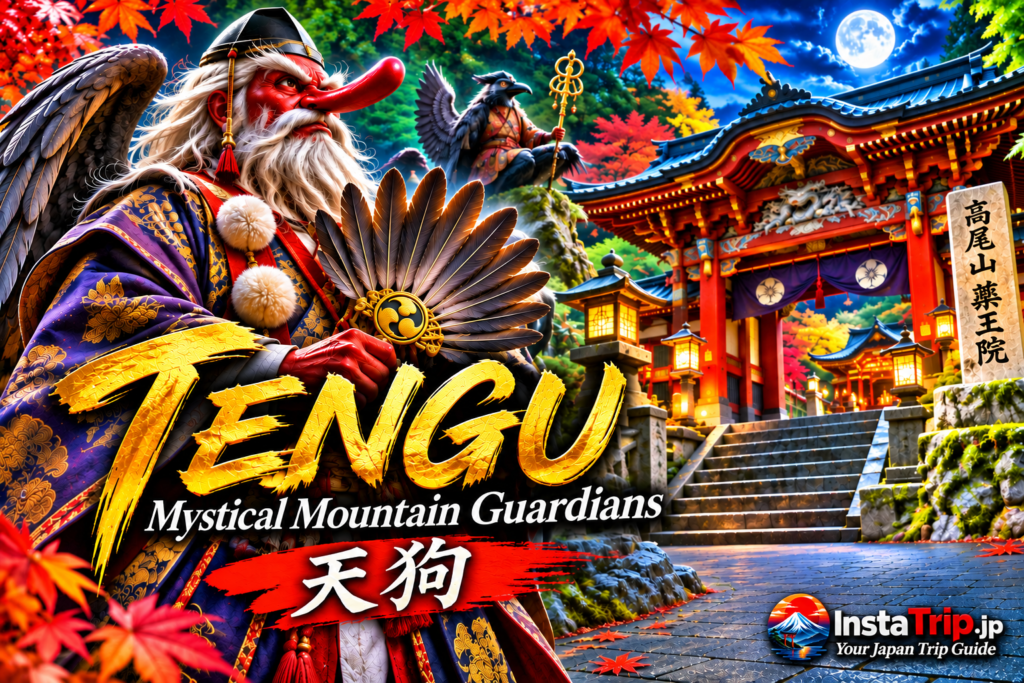
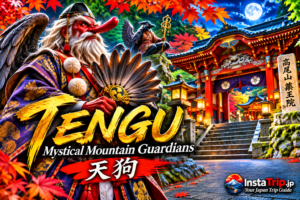
A long red nose, dark feathered wings, and a fan powerful enough to sweep away misfortune: few figures capture the mysterious spirit of Japan’s mountains quite like the tengu (天狗). Depending on the story, these supernatural beings can be frightening tricksters, stern teachers, or protectors of sacred forests. On Mount Takao, just west of central Tokyo, their presence is more than a bedtime tale: their images stand at the heart of a living temple tradition.
This guide explores the legends, the religious history behind them, and how to visit Takao-san Yakuō-in (高尾山薬王院), where travelers can encounter two celebrated tengu figures amid ancient trees, red temple architecture, and mountain paths.
At a glance: Tengu 天狗 · Mount Takao 高尾山 · Hachiōji 八王子, Tokyo · Yakuō-in 薬王院 · Best for folklore, mountain scenery, and Japanese spiritual traditions.
Experience Mount Takao: a 4K walking tour
Start with the atmosphere: forest paths, the approach to the temple, sacred architecture, and the tengu figures themselves. In the video below, the Yakuō-in section begins around 17:50, with tengu statues appearing around 22:35.

What is a tengu (天狗)?
The word tengu is traditionally written 天狗, literally “heavenly dog,” but the beings that appear in Japanese stories look nothing like ordinary dogs. They belong to the broad world of yōkai (妖怪), supernatural entities of Japanese folklore. Some narratives describe tengu as disruptive spirits that embarrass the arrogant or lead careless people astray; others portray them as formidable guardians of sacred mountains.
That changeable personality is the point. A tengu is not simply a monster to defeat. It represents the unsettling power of the mountains: places that nourish travelers, challenge the body, and remind people that nature cannot always be controlled.
Two faces of the mountain spirit: daitengu and karasu-tengu
Daitengu (大天狗): the long-nosed elder
The best-known tengu has a humanlike face, fierce expression, strikingly long nose, and the clothing of a mountain ascetic. These imposing figures are often known as daitengu, or “great tengu.” Their appearance can suggest experience, authority, and spiritual discipline. A fan made of feathers is a recurring emblem: in the symbolism described by Yakuō-in, it can scatter misfortune and invite good fortune.
Karasu-tengu (烏天狗): the crow-faced spirit
Another form bears a bird’s beak and sometimes conspicuous black wings. These are widely called karasu-tengu, or crow tengu. The two types are especially meaningful at Yakuō-in: the temple itself describes the smaller bird-beaked figure as a being still undergoing training, while the larger long-nosed tengu resembles a seasoned yamabushi (山伏), an ascetic with developed spiritual power.

Look for both figures near Izuna Gongen-dō (飯縄権現堂) during your visit. The statues invite you to notice how folklore and living religious practice meet in one place.
Why Mount Takao is sacred to tengu
Mount Takao is an approachable mountain on the western edge of metropolitan Tokyo, yet its religious history stretches back centuries. According to the temple’s official history, Yakuō-in was established in 744 through the efforts of the Buddhist priest Gyōki. In the late fourteenth century, the monk Shungen revived the temple and placed Izuna Daigongen (飯縄大権現) at the center of its devotion.
Izuna Daigongen is linked to the protective, sometimes fierce imagery of esoteric Buddhism. The temple’s traditions also belong to Shugendō (修験道), a Japanese mountain-ascetic tradition that blends devotional practices, difficult training, and deep respect for mountain landscapes. Its practitioners, known as yamabushi, helped shape the familiar visual language of tengu: robes, ritual implements, and the aura of someone who has learned from the mountain.
In temple tradition, tengu serve as messengers of deities and buddhas, correcting wrongdoing and protecting those who act well. Rather than treating this as a literal claim about what visitors will see, it is best understood as a powerful living belief that gives the landscape an added layer of meaning.
Five details to notice at Yakuō-in
1. The paired tengu images
Pause before the long-nosed and crow-beaked figures. Their different faces tell a story about practice, maturity, and the transformation from fearsome wilderness spirit into mountain guardian.
2. The feather fan (羽団扇, hauchiwa)
A tengu’s feathered fan is more than a dramatic accessory. In local temple belief it can sweep away evil influences and draw favorable winds. The imagery connects protection with the movement of air through the forest canopy.
3. Izuna Daigongen (飯縄大権現)
Look for references to the temple’s principal protective deity. Learning this name makes sense of the relationship between the tengu statues and Yakuō-in’s broader religious life.
4. The atmosphere of Shugendō
From prayer halls to forest tracks, Mount Takao retains reminders that the mountain has been a place of training, not merely recreation. Do not confuse temple ritual areas with public hiking trails; follow posted signs and respect restricted spaces.
5. The landscape itself
Dense vegetation, changing mountain light, and the sound of footsteps on a wooded path provide the experience that no souvenir can reproduce. For many visitors, the best way to appreciate tengu folklore is simply to walk more slowly.
Visiting Takao-san Yakuō-in from Tokyo
Address: 2177 Takaomachi, Hachiōji, Tokyo 193-8686 (東京都八王子市高尾町2177). The temple is partway up Mount Takao, not at the railway station itself.
By train: Take the Keio Line toward Takaosanguchi Station (高尾山口駅); services from Shinjuku make the mountain practical as a Tokyo day trip. From the station, choose a walking trail or use the mountain’s cable car/chairlift services to reduce the uphill effort. The temple still requires walking on the mountain approach. Consult the operator for current service, fares, and last departures before traveling.
A gentle first visit: Takaosanguchi Station → cable car or an appropriate walking route → Yakuō-in and its tengu statues → Mount Takao summit if time and conditions permit → return before the final transport service. The itinerary is a suggestion, not a guaranteed step-free route.
Open Yakuō-in on Google Maps · Temple access information · Official regional Mount Takao guide
When to go: seasonal beauty and practical advice
Autumn: Red and gold maples echo the colors of traditional tengu imagery, making this one of the mountain’s most visually striking periods. Popular foliage weekends can be crowded, so start early.
Spring: Fresh greenery and comfortable walking weather make it a rewarding time for a first visit. Summer: The forest feels lush, but heat, humidity, and sudden rain require preparation. Winter: Clear days can be beautiful; temperatures on the mountain may be considerably cooler than in the city.
Wear shoes with grip, carry drinking water, keep an eye on sunset, and check trail or cable-car advisories. A nighttime depiction of the legend is not an invitation to assume temple facilities are open after dark.
Temple etiquette: visiting a sacred place respectfully
Yakuō-in is an active Buddhist temple. Keep voices low near ceremonies, avoid blocking worshippers, ask before photographing interiors or rituals, and observe signs about restricted areas. If you participate in prayer or purchase an omamori (お守り, protective amulet), treat the tradition respectfully whether or not you share the belief.
Useful Japanese words
- 天狗 — Tengu: supernatural mountain being.
- 烏天狗 — Karasu-tengu: crow-like tengu.
- 大天狗 — Daitengu: great or long-nosed tengu.
- 山伏 — Yamabushi: mountain ascetic practitioner.
- 修験道 — Shugendō: Japanese mountain-ascetic tradition.
- 羽団扇 — Hauchiwa: feather fan associated with tengu.
- 薬王院 — Yakuō-in: temple on Mount Takao.
Frequently asked questions
Are tengu gods or monsters?
There is no single answer across every legend. They appear as yōkai, fearsome tricksters, ascetic spirits, and protective messengers depending on the region and religious context.
Can you see actual tengu statues at Mount Takao?
Yes. The Yakuō-in tradition prominently features both a long-nosed and a crow-beaked tengu near Izuna Gongen-dō.
Is Yakuō-in a good day trip from Tokyo?
Yes. It combines accessible public transport, forest scenery, religious heritage, and a distinctive folklore theme. Allow enough time for the uphill approach and the return journey.
Continue exploring Mystical Japan
Discover more stories in our guide to Japanese folklore and the places where legends still live. These traditions are part of Japan’s cultural landscape, best experienced with curiosity and respect.
Travel and folklore inspiration: Browse traditional tengu masks and explore day-hiking essentials on Amazon.com. Paid links
Sources and further reading
- Takao-san Yakuō-in — official history and the tengu of Mount Takao
- Japan National Tourism Organization — Yakuō-in travel information
- Official Mount Takao tourism information